
“Expedited shipping” is the catch-all term most retailers use for a delivery option that is faster than their standard shipping choice, usually offered as a paid upgrade at checkout. As a practical definition of expedited shipping, it signals that your order will be prioritised in some way (processing, carrier service level, or both), but it does not automatically mean “next-day.”
This guide is for shoppers trying to decode checkout options, ecommerce brands deciding how to price and label faster delivery, and operations/logistics teams who need the operational reality behind the marketing label.
You’ll get a plain definition of how “expedited” is commonly used versus “express,” and how to set expectations in checkout language so customers understand what they’re buying, without you overpromising on delivery performance.
Expedited Shipping Definition (What It Means in 2026)
Expedited shipping refers to any shipping option positioned as faster than a seller’s standard delivery method, typically by using higher-priority carrier services and/or faster order processing. Most of the confusion comes from the fact that “expedited” is a label, not a universal carrier product.
Expedited shipping is described as a “blanket term” that varies by carrier and merchant, and there is no single hard-and-fast definition across the industry.
What expedited usually implies is “faster than the default.” It might mean:
- faster warehouse handling (priority pick/pack, earlier dispatch), and/or
- faster transit (e.g., upgrading from an economy ground service to a 2–3 day air/accelerated lane).
What it doesn’t guarantee: that you’ll receive it tomorrow. Even “overnight” can effectively behave like “expedited” (or be sold under that label) depending on origin, destination, and the merchant’s standard option.
How Carriers and Retailers Use the Term
Carriers typically sell specific, named services with stated delivery targets (for example, economy ground services measured in business days, or premium express services that can be as fast as same-day delivery or overnight delivery on eligible lanes).
Retailers, by contrast, often use “Expedited” as a tier label that maps to different carrier products behind the scenes. That mapping can change by destination zone, warehouse location, or even time of year, while the customer still just sees “Standard” vs “Expedited” in checkout.
Standard vs Expedited vs Express vs Same-day (at a glance)
Expedited shipping differs from standard and express deliveries, and more so with same-day deliveries. Instead of treating these as fixed promises, it helps to think of them as relative tiers. The “typical” windows below are indicative examples based on common U.S. carrier ground service standards and widely used ecommerce tiering; your actual timelines depend on lane, cutoff time, and service availability.
Expedited Shipping Definition vs Express Shipping Definition
In day-to-day ecommerce, expedited and express sometimes overlap, especially when a store’s “expedited” option is implemented using express/air products for certain lanes. Shopify explicitly notes that expedited simply means “faster than standard,” and even overnight can fall under that umbrella depending on what the standard baseline is.
When brands draw a clear distinction, it usually looks like this:
- Expedited = “faster, but not the fastest,” with more variability in how it’s fulfilled across regions and carriers.
- Express = “urgent/premium,” typically tied to specific carrier services with stricter cutoffs and tighter delivery targets.
The operational takeaway is simple: “Express” is more likely to be a named carrier product, while “Expedited” is more likely to be a retailer-facing label mapped to one or more carrier products.
Expedited Delivery and Expedited Shipping Definition (Is It the Same Thing?)
Most of the time, yes. People use “expedited delivery” and “expedited shipping” interchangeably. The subtle difference is perspective:
- Shipping is the method and service level used to move the parcel (carrier + network).
- Delivery is the customer outcome (when it arrives at the door).
That distinction matters because a merchant can “expedite” the experience by speeding up processing (getting the order out the door sooner) even if the carrier service level doesn’t change, or by upgrading the carrier service while processing stays the same. In checkout and customer communications, it’s often clearer to talk about delivery dates or delivery windows rather than shipping labels alone.
Expedited Shipping Meaning in Ecommerce Checkout
When a customer selects “Expedited” at checkout, they generally expect three things:
- a shorter delivery window than standard,
- confidence that the merchant is prioritising their order, and
- fewer surprises (clear tracking and clearer dates).
To meet those expectations, your wording should separate what you control (dispatch/handling) from what the carrier controls (transit). Shipping speed transparency emphasises the value of providing estimated delivery times at checkout to build trust and reduce friction.
Here are examples of expectation-setting language that tends to work well because it is specific without overpromising:
- “Expedited: estimated delivery 1–3 business days after dispatch. Order before [cutoff time] for same-day dispatch (business days).”
- “Expedited: prioritised dispatch + faster carrier service where available. Delivery estimates exclude weekends/holidays and remote areas.”
- “Need it by a specific date? Choose Expedited and order by [day/time]. We’ll confirm your estimated delivery date after checkout.”
These statements do two important jobs: they define “expedited” relative to your standard option, and they set a defensible promise structure (estimate window + cutoff + exclusions) that aligns with how expedited tiers are actually implemented across carriers and lanes.
Scale Faster with Robotics-Powered 3PL Fulfilment
Automate pick, pack, and dispatch with tech-enabled fulfilment built for speed and accuracy, so you can grow without the warehouse overhead. Contact us today - (02) 9090 4747
Standard and Expedited Shipping (Key Definition Differences)
The simplest way to separate standard from expedited is to ask what the “default” experience is for a given store. Standard shipping is typically the merchant’s lowest-cost, most broadly available option, commonly fulfilled via ground networks and normal warehouse workflows. Expedited shipping is a faster tier positioned above standard, either because the merchant processes orders sooner, upgrades the carrier service, or both.
What makes this confusing in ecommerce is that “standard” and “expedited” are often merchant-defined labels, not universal carrier products. A brand might call something “standard” even if the carrier’s published transit time is relatively fast on certain metro lanes, and the same brand might call a 2-day air product “expedited” in one region but “express” in another. The label is the customer-facing promise; the operational reality is the combination of your processing speed plus the carrier’s transit network.
Here is a practical comparison that reflects how these tiers usually differ in practice:
Where the Time Savings Usually Come From
In most implementations, expedited delivery is achieved through one (or both) of these levers:
- Warehouse priority: the order is reviewed, picked, packed, labelled, and handed to the carrier sooner. This is usually framed as processing time, which is the period from order placement to the moment the merchant hands the parcel to the carrier.
- Faster transport: the parcel moves through a faster lane (accelerated ground or air). For example, UPS positions Ground as an affordable option with delivery within one to five business days, while separating out accelerated and urgent services for faster delivery. Next-day and 2-business-day services are described as distinct products.
This is also where the difference between “fast shipping” and “expedited shipping” matters. “Fast shipping” can be pure marketing (“we ship fast”), while “expedited” should correspond to a specific operational decision: priority processing, upgraded transit, or both.
Handling Time vs Transit Time (Where Expedited Actually Speeds Things Up)
From a customer’s perspective, the only thing that matters is when the parcel arrives. Operationally, that arrival time is usually the sum of two controllable components:
- Processing (handling) time: everything from order placement to the handoff to the carrier.
- Transit time: the carrier’s movement of the parcel through its network after acceptance.
Expedited shipping can apply to either component:
Scenario 1: Metro lane, non-peak. A customer places an order early in the day. If your expedited tier triggers priority picking and the parcel makes the same-day carrier pickup, you may cut a full day off the total timeline, even before changing the carrier service.
Scenario 2: Regional or remote destination. You upgrade the carrier to a faster service, but the lane has limited coverage or longer linehaul segments. The expedited option may still beat standard, but the improvement can be modest relative to the price because geography dominates the timeline.
Scenario 3: Cutoff missed. The customer buys expedited at 4:55 pm, but your warehouse's cutoff for same-day dispatch is 3:00 pm. In that case, “expedited” may only change the transit speed, not the day it leaves, and the customer’s perceived benefit shrinks. This is why aligning checkout messaging to real cutoffs is as important as the carrier product choice.
How Fast Is Expedited Shipping?
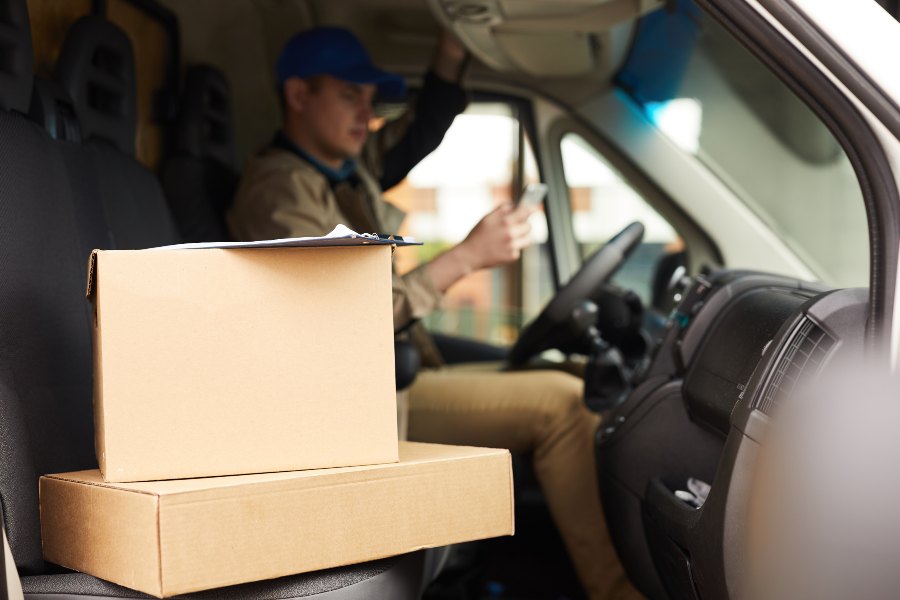
Expedited shipping is “faster-than-standard,” but the actual speed depends on what the merchant’s standard option is and which carrier products sit behind the checkout label. In many stores, “expedited” services typically map to services designed around 1–3 business days, while “express” tends to map to similarly urgent options with tighter service definitions. Some stores, depending on the lane and warehouse proximity, can even offer overnight shipping and next-day deliveries.
A useful way to calibrate expectations is to look at what major carriers treat as “baseline” versus “accelerated.” For example, UPS positions UPS Ground as a budget-friendly option delivering within one to five business days across the U.S., with separate buckets for accelerated (2–3 days) and urgent (overnight) services.
Typical Delivery Windows by Market (Ranges, Not Promises)
Because the term “expedited” isn’t globally standardised, the best you can do (and the most defensible approach for merchants) is to communicate ranges and the assumptions behind them. The examples below use well-known postal/carrier services as reference points:
- Australia (domestic): “Next business day” outcomes are often lane- and postcode-dependent; Australia Post explicitly lists postcode coverage where Express Post can be next-business-day, rather than positioning it as universal.
- United States (domestic): Standard options often align with ground networks (e.g., UPS Ground’s 1–5 business days) or economy postal services. “Faster tiers” frequently align with 2-day products (e.g., FedEx 2Day) and premium postal express services (e.g., USPS Priority Mail Express, marketed as 1–3 days with a money-back guarantee in many cases)
- United Kingdom (domestic): Premium, urgent services can include “guaranteed next-day” offerings such as Royal Mail Special Delivery Guaranteed by 1 pm.
- Canada (domestic): Canada Post positions Xpresspost as a next-day or 2-day service, with an on-time delivery guarantee.
The commercial implication for ecommerce teams: “expedited” is best framed as a faster lane that is conditional (on destination coverage, cutoffs, and network conditions) rather than a blanket promise.
Factors that Change the Timeline
Even when you buy a faster service level for urgent shipments, delivery outcomes vary because networks are designed around constraints that are not evenly distributed.
Distance and coverage are the big ones. Ground networks are inherently zone-based: the farther the package goes, the more handoffs and linehaul legs it requires. That’s why even a single service like UPS Ground spans a wide 1–5 business-day range.
Cutoff times are the second major variable. Carriers typically measure delivery commitments from when they receive the shipment, not from when the customer clicks “Pay now.” It is recommended that you must meet the cutoff time to achieve “second day” delivery, and also notes that ecommerce purchases can be delayed if the retailer doesn’t hand the parcel over before the cutoff.
Peak periods and capacity constraints can also affect how “expedited” performs. Carriers may apply demand (peak) surcharges and adjust demand periods, signalling that network capacity is constrained at certain times of year, often the same periods when customer expectations for fast shipping are highest.
Weather and disruptions are obvious, but international expedited shipping introduces customs, which is frequently the single biggest source of variability, even for air freight shipment services (more on this below).
When "Expedited" Becomes Effectively “Express” (and When it Barely Beats Standard)
Expedited can feel like express in major metro lanes because the baseline is already short. If a merchant’s standard option arrives in roughly 2–3 days, an “expedited” upgrade might be implemented as overnight on that lane, or simply behave like next-day because the origin and destination are close and the network is dense. Overnight and expedited shipping can be the same, depending on the destination.
The reverse happens in remote or difficult-to-serve areas. Even with an upgraded service, coverage limits and additional handoffs reduce the practical time savings. This is why some carriers define remote/extended delivery areas (often by postcode/ZIP) and treat them differently from a cost and network standpoint.
Expedited Shipping Timeframes by Distance and Zone
A practical way to message expedited delivery windows is to align them with distance bands (local/metro, intrastate, interstate, remote) instead of trying to force a single national promise.
- Local/metro: Expedited is most likely to achieve “near-express” outcomes because linehaul is short and last-mile density is high.
- Intrastate: Still favourable; many networks can hit fast windows if the shipment makes the day’s pickup and the lane is well covered.
- Interstate: The benefit depends on whether the merchant upgrades from ground to air (or to an accelerated ground product).
- Remote: The improvement can be marginal relative to the price because the last mile and routing complexity dominate.
This is exactly why services with “next business day” positioning often publish coverage/eligibility rather than implying universal next-day delivery. Australia Post, for example, provides postcode-based coverage for next-business-day Express Post lanes and directs senders to calculate delivery times when outside those postcodes.
Expedited Shipping Cutoff Times and Order Deadlines
If you offer expedited shipping, cutoff times are not a footnote; they are the control point that determines whether “expedited” delivers a meaningful improvement or becomes an expensive disappointment.
There are typically two cutoffs in play:
- Your warehouse cutoff (the latest time an order can be picked/packed to make same-day dispatch).
- Carrier cutoff (the latest tender time for that service level at your pickup location or drop-off).
For checkout, the best-performing approach is usually to present expedited as an estimated delivery window tied to dispatch rules, not as a standalone speed claim. You do not need excessive detail, just the minimum facts a customer uses to decide: business days, cutoff time, and exclusions.
Expedited Shipping International Timelines
International “expedited” generally means air-priority transport paired with faster handling through export/import steps, but customs is the variable that expedited shipping cannot fully control.
Clearance delays can occur for a variety of reasons, and tracking may provide the reason and recommended action, especially when additional information is required from the shipper or recipient.
Lower Shipping Spend with SKUTOPIA
Our smart carrier selection through our shipping platform lets you compare live courier rates, automate carrier choice with rules, and generate labels in one platform to cut admin time and shipping costs. All with transparent pricing - (02) 9090 4747
Expedited Shipping Cost (Why It Costs More)
Expedited shipping costs more because you are paying for some combination of (a) faster transport capacity, (b) priority within the carrier network, and (c) priority within the merchant’s own fulfilment process. The cost uplift is also amplified by accessorial charges that are more likely to apply to fast lanes (e.g., delivery area, signature, oversize/handling rules).
Air vs Ground, and the Economics of Space
Air (and other time-definite networks) is priced around capacity scarcity. Separately, even within ground networks, parcel pricing is heavily influenced by how much space a package consumes. Dimensional (DIM) weight is the space a package occupies relative to actual weight, and you’re charged based on dimensional or actual weight, whichever is greater.
That matters because expedited tiers are where DIM weight and packaging decisions can move your unit economics dramatically, especially on lightweight but bulky items.
Fuel and Demand Surcharges
Fuel surcharges are not static; they are subject to weekly adjustment and based on published fuel price indices. In peak periods, carriers can add additional demand surcharges on top of other charges. UPS’s demand surcharge document, for example, states that demand surcharges apply in addition to all other applicable charges and lists demand periods spanning late 2025 into January 2026.
Delivery Area, Remote, and “Exception” Charges
Fast shipping options also tend to surface the fees you can sometimes ignore in regular shipping, until you scale.
FedEx’s published surcharge changes show that Delivery Area Surcharge categories can vary by residential/commercial, extended, and remote designations. Remote-area surcharges are also described as part of “exceptional services” for more difficult-to-serve deliveries and pickups.
Common Pricing Models (And Why They Exist)
Most ecommerce brands price expedited shipping using one of these structures:
- Flat-rate upgrade: Simple for customers; risky for merchants if DIM weight, remote-area fees, or peak surcharges are not controlled.
- Tiered by cart value: Often used to nudge AOV (“$X expedited shipping, free expedited over $Y”).
- Weight/price-banded by zone: A more operationally accurate version of “flat rate” that reduces margin shock on heavier orders.
- Dynamic/carrier-calculated rates: Closest to pass-through pricing, but can hurt conversion if rates look volatile.
Some brands explicitly support flat rates that vary by shipping zone and can be made conditional by order price or weight, one of the most common ways businesses keep expedited offers viable without subsidising the wrong baskets.
Expedited Shipping Price vs Express Price (What You’re Paying For)
The simplest distinction is that express options are more likely to be tied to time-definite services with stricter delivery commitments, while expedited is often a “faster-than-standard” tier that may be implemented with different carrier products by lane.
You can see the difference in how postal services position premium options: USPS markets Priority Mail Express as a 1–3 day service with a money-back guarantee in many cases, which is qualitatively different from a generic “expedited” label.
Hidden Fees that Affect Expedited Shipping Rates
For many brands, expedited shipping “loses money” not because the base rate is wrong, but because accessorials weren’t modelled. The most common culprits are:
- DIM weight exposure (packaging choice turns a light item into a costly billed weight)
- Fuel surcharges (variable and may be updated frequently)
- Delivery area/remote/extended surcharges
- Additional handling and oversize rules (criteria and fees change over time)
- Peak/demand surcharges during high-volume periods
Cost-control checklist
To keep expedited profitable without degrading the customer experience, the most reliable levers tend to be operational, not marketing:
- Right-size packaging to reduce DIM weight exposure.
- Align expedited eligibility to cutoffs you can consistently hit (and reflect those cutoffs in checkout messaging).
- Restrict expedited on lanes where delivery-area/remote surcharges routinely apply (or price those lanes separately).
- Audit invoices during peak periods for demand surcharge impacts, then adjust thresholds and promotions accordingly.
- Treat “oversize/handling” criteria as a living constraint and review carrier updates at least quarterly.
Win More with Fast, Reliable Fulfilment
Impress wholesale customers with B2B fulfilment and retail fulfilment designed for speed, low error rates, and seamless integration, built to scale with demand. Contact us today - (02) 9090 4747
Expedited Shipping Services (Carrier and Retailer Service Levels)

Expedited shipping becomes far easier to manage once you separate carrier service levels from retailer labels. Carriers sell named products with defined network characteristics, while retailers often present simplified tiers (“Standard/Expedited/Express delivery”) and then map those tiers to different carrier products based on destination, warehouse, and time of year. The practical implication is that your “expedited” label requires a documented service map; otherwise, it will lead to inconsistent customer outcomes across shipping distance bands and zones.
Operationally, expedited is only as strong as the weakest link in the chain: pickup cadence, linehaul method (ground vs air), last-mile partner, and scan compliance all influence whether the customer experiences a meaningful speed lift versus standard shipping methods. If you use delivery dates in checkout, it is recommended to calculate and display them based on processing time (your handling) and transit time (the carrier leg). That framing is particularly useful for expedited tiers because it lets you offer next business day delivery or two-day delivery where it’s actually achievable, without pretending you control the carrier network end-to-end.
Tracking and visibility are part of the “service,” not an afterthought in ecommerce shipping. Customers expect quick movement from “label created” to “carrier received,” followed by clear milestones such as “in transit,” “out for delivery,” and “delivered.” For expedited orders, those early scans matter: if the parcel doesn’t show “received by carrier” shortly after dispatch, customers often assume the expedited upgrade wasn’t honoured, whether or not that’s actually true, especially when you’re using third-party courier services or shipping international shipments where upstream events (including customs clearance) can shift timelines.
Expedited Shipping Options (When Customers Should Choose It)
From the customer’s perspective, expedited is worth paying for when the value of arriving sooner exceeds the upgrade cost and additional fees. In practice, three situations dominate:
- A real deadline (travel, event, gifting) where the order must arrive quickly
- Higher-value items where reduced time-in-transit lowers risk through the supply chain to the final destination
- Perishable goods or other time-sensitive items, where delivery speed protects product quality
A simple decision framework you can embed for online shoppers in checkout content is: Do you need it by a specific date? Are you shipping to a metro area with reliable coverage? Is the order value (or urgency) high enough to justify the upgrade? If the answer is “no” to all three, expedited is often a poor bet, especially for remote/extended delivery areas where “destination faster” improvements can be marginal.
For gifts and deadline-driven purchases, the most important experience element is not the label “expedited,” but the estimated delivery window and the order cutoff time. Explicit delivery-date messaging tends to reduce ambiguity because it clarifies what the customer is buying: a probability-weighted window (for example, one-day shipping in select lanes), not a vague promise. That clarity tends to drive increased customer satisfaction and reduce buyer’s remorse.
Expedited Shipping for Businesses (Operational Requirements)
To offer profitability, you need the “expedite promise stack” to align what checkout promises, what your warehouse can achieve (pick/pack SLAs), and what the carrier service can reliably deliver on that lane. In other words, expedited shipping depends on the entire supply chain working in sync, not just the carrier's product name.
The delivery-date model, processing time plus transit time, aligns with how operations teams should think about expedited in an ecommerce business. If you cannot consistently shorten processing time (priority queueing, staffing, batching rules), your expedited tier becomes “pay more for the same dispatch speed,” which is where customer disappointment and refund requests often start.
Network design is the longer-term lever. Distributed inventory (multi-warehouse, 3PL nodes, or zone-forwarding strategies) can convert “expedited” from an air-cost problem into a placement problem. When inventory sits closer to demand, you can ship products faster while controlling costs—often the difference between a premium upgrade and a cost-effective option that helps you save money while still creating a competitive advantage.
Expedited Shipping Policies (What to State on Your Site)
An expedited shipping policy should be written to prevent two predictable failure modes: customers assuming “next-day,” and customers believing delays automatically entitle them to refunds. It should also define what expedited shipping means for your store versus your other standard shipping methods and express delivery tiers.
At minimum, your expedited policy should clearly state: the service description (what “expedited” means for your store), the delivery window and how it’s calculated, cutoff times, business days vs weekends/holidays, exclusions (PO boxes, remote areas, certain SKUs), address requirements, and how returns are affected. Put the short version in checkout, and the full version on your shipping policy page (and link it near the shipping selector). If you offer free expedited shipping (or run “free expedited shipping” promotions), specify eligibility thresholds, excluded postcodes, and whether the benefit applies to international shipments.
A particularly important distinction is guaranteed vs estimated. If you are not purchasing a service with a clear, enforceable guarantee, do not use guarantee language. Use “estimated delivery” phrasing and explain the conditions that move the estimate (cutoffs, carrier delays, weather, customs clearance).
Expedited Shipping Problems (Delays, Exceptions, and Returns)
Expedited shipments most commonly fail for reasons that are mundane but predictable: missed cutoffs, incomplete addresses, carrier capacity constraints, weather, and (for international shipments) clearance delays. The moment something goes off-script, it usually appears as a tracking exception, and customers start questioning whether they’ll get their packages delivered on time, particularly for time-sensitive packages.
To reduce expedited support tickets, treat comms as part of the service: confirm dispatch fast, surface the estimated window, and proactively message exceptions with a clear next step (“we’re monitoring,” “please confirm address,” “carrier attempted delivery, choose an alternative”). Also, make tracking self-serve by translating carrier language into customer language, especially when multiple partners are involved (carrier + last-mile courier services), or when handoffs occur via the post office in certain regions.
One operational nuance to be explicit about: faster outbound shipping does not automatically make returns faster. Returns are a separate network flow with its own service levels, and customers often conflate the two unless you state it clearly.
Expedited Shipping Best Practices (How to Offer It Profitably)
Profitable expedited shipping is usually a targeted offer, not a blanket entitlement for online orders. High-performing programs define where expedited is genuinely reliable (specific lanes and postcode bands), which SKUs won’t blow up costs (DIM weight, oversize), and what thresholds prevent margin erosion and unexpected additional fees. This is also where you decide whether to reserve premium options (like next business day delivery or one day shipping) for a subset of destinations, rather than diluting reliability everywhere.
A practical operating rhythm is: start with conservative eligibility rules, then expand based on performance data. Monitor a KPI set that captures both service and economics: on-time delivery %, dispatch SLA hit rate, cost per order, WISMO/contact rate, refunds/credits rate, and customer satisfaction impact. Done well, expedited becomes a lever for increased customer satisfaction, repeat purchase behaviour, and customer loyalty, particularly among repeat customers and other loyal customers who value predictability over marketing labels.
As you scale, keep your policy language and checkout delivery messaging tightly aligned to how you actually calculate dates (processing + transit). This alignment is often the simplest way to protect margins, reduce disputes, and preserve the long-term competitive advantage of your delivery promise.
Deliver a Premium Post-Purchase Experience
SKUTOPIA's order orchestration system gives your customers transparent tracking, branded notifications, and proactive issue detection, while your team gains control across complex order flows. Reach out today - (02) 9090 4747
Expedited Shipping Key Takeaways for 2026

Expedited shipping works best when it is defined as a measurable, operationally backed service tier rather than a vague promise. It should be clearly faster than your standard option, without being implicitly treated as next-day, and the speed gain should be grounded in processing priority, faster transit, or a combination of both.
A credible expedited experience also includes clear tracking milestones and proactive exception communications. To support this, policies should explicitly state delivery windows, order cutoffs, applicable business days, exclusions, and careful estimate-versus-guarantee language. Expedited should also be offered selectively, by lane, SKU, or threshold, and managed as an ongoing performance program rather than a static checkout checkbox.
As a next step, audit your checkout labels and delivery-date logic, then update your shipping policy page so the expedited promise, and the conditions that govern it, are explicit and defensible.

Fariha Shuvakhana
Fariha Shuvakhana is the Chief Growth Officer at SKUTOPIA, a 3PL fulfilment and shipping platform for fast‑growing eCommerce businesses. Fariha focuses on sustainable, customer‑first growth - aligning go‑to‑market strategy with operational efficiency and partner‑led expansion.