Why Smart Shippers Never Skip Dunnage
Dunnage might not be a household word, but if you've ever received a call from a furious customer whose order arrived in pieces, you've experienced the consequences of inadequate protective packaging firsthand. The product shifted during transit, smashed against the container walls, and now you're facing a costly return, a negative review, and a tarnished reputation. This scenario plays out thousands of times across Australia every year, but it's largely preventable with proper dunnage.
In this comprehensive guide, we'll explore the types of dunnage available, the tangible benefits they provide, how to choose the right materials for your products, and best practices for implementation. We'll also provide tips for small businesses and established operations alike.
Whether you're shipping delicate electronics, heavy machinery, or sensitive items across Australia or internationally, understanding dunnage will transform how you protect cargo and deliver customer satisfaction.
Dunnage Meaning: The Foundation of Safe Shipping
Dunnage Definition and Why Does It Matter
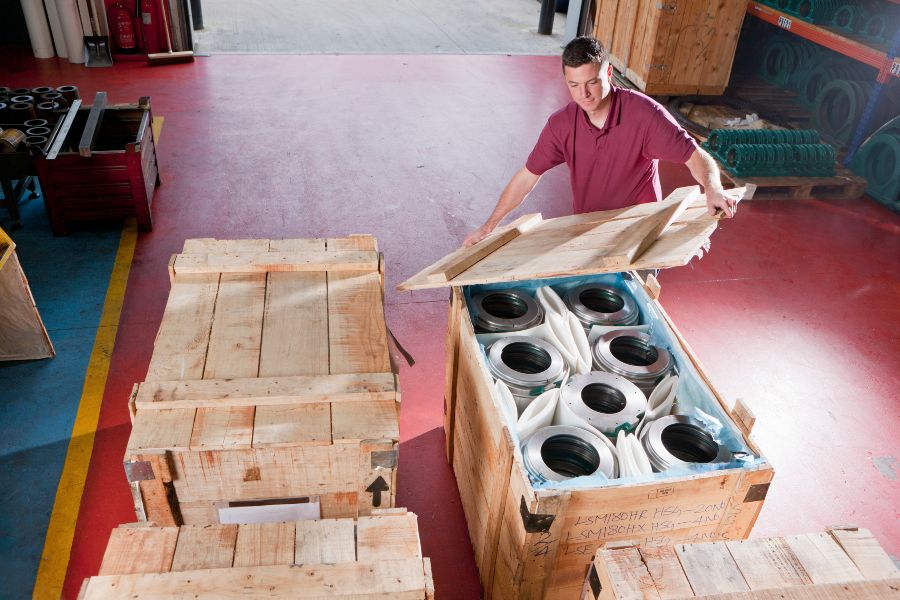
Dunnage refers to packing material specifically designed to protect goods from physical damage during shipping and handling. From simple kraft paper to sophisticated custom-fitted foam, dunnage fills empty spaces, creates protective barriers, absorbs shock, and prevents cargo items from shifting during transit.
For Australian businesses that ship products domestically and internationally, navigating increasingly complex logistics challenges, where 81% of returns happen because items arrive damaged or defective, proper dunnage isn't optional; it's essential infrastructure for successful shipping operations.
Dunnage performs several critical functions:
- Fills empty space within containers, preventing items from sliding around when vehicles accelerate, brake, or navigate corners.
- Creates protective barriers between products and container walls, absorbing impact from external forces.
- Provides shock absorption, dissipating energy that would otherwise transfer directly to your goods.
- Certain dunnage materials offer moisture damage protection, shielding sensitive items from humidity and condensation during long-distance ship or truck transport. These materials are specifically used to protect cargo from the rigours of transit, whether that involves fragile objects like glassware or robust machinery.
Many businesses mistakenly view dunnage as an unnecessary cost, but this perspective ignores the substantial financial impact of damaged goods. The total cost of damaged deliveries in the past year amounted to approximately $2.92 billion, with industries relying on fragile cargo, electronics, ceramics, glassware, and medical equipment bearing the heaviest burden. When proper dunnage isn't used, products shift, collide, and break, leading to customer complaints, increased returns, and ultimately, damage to your brand's reputation.
Consider the journey your shipment takes: from warehouse to truck, through multiple handling points, across bumpy roads or rough seas, and finally to the customer's doorstep. Each stage introduces risk. Whether transported by trucks, ships, planes, or other vehicles, without adequate damage protection dunnage, even the sturdiest primary packaging cannot prevent the chaos of cargo in motion.
Ready to Protect Your Products from Day One?
Our pick-and-pack solutions include expert packaging consultation to ensure every order leaves our warehouse properly protected. Get in touch with us today - (02) 9090 4747
The 10 Essential Types of Dunnage Every Shipper Should Know
From Budget-Friendly to Heavy-Duty Solutions
Choosing the right dunnage materials requires understanding the full spectrum of options available. Here are the ten essential types, organised from most accessible to specialised solutions. For example, lightweight items might need simple paper-based protection, whilst heavy machinery demands structural support:
1. Crinkle Paper (Kraft Paper)
Kraft paper consists of shredded strips of recycled paper that fill empty spaces in boxes and packages. This eco-friendly, inexpensive option provides padding for lightweight products, offering cushioning from minor impacts. It's incredibly cost-effective, reusable, and safe for most applications. However, kraft paper offers limited protection for heavy or highly fragile items and provides minimal moisture resistance.
2. Packing Peanuts
Invented in 1965, packing peanuts remain one of the shipping industry's most recognisable dunnage materials. These lightweight foam nuggets fill large voids and provide air circulation around products. Modern versions are often made from biodegradable Cornstarch rather than traditional polystyrene, addressing environmental concerns. While packing peanuts excel at low cost and versatility, they don't fully prevent shifting, making them less suitable for delicate electronics or other materials that require more rigid support.
3. Bubble Wrap
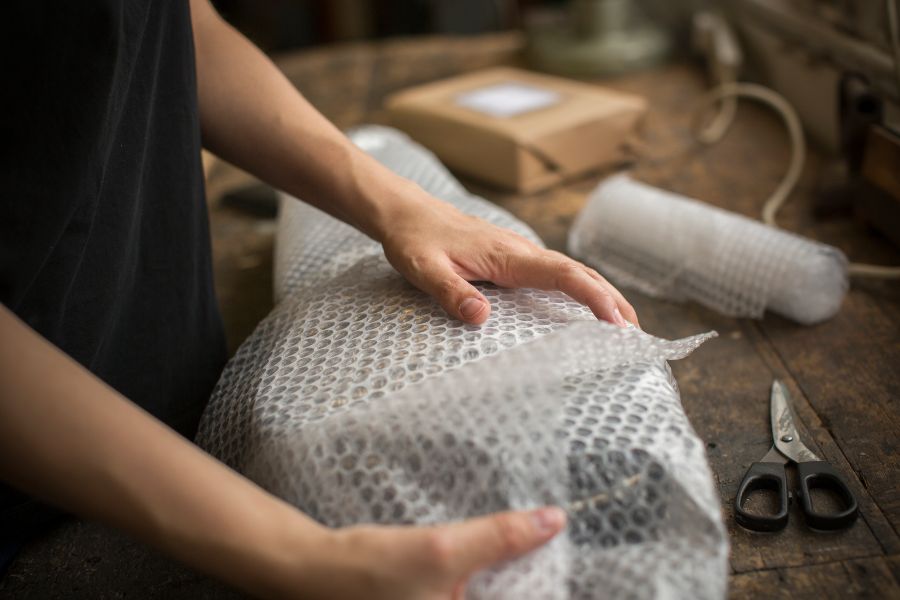
This affordable cushioning material uses air-filled pockets to protect delicate goods during shipping. Bubble wrap can be used on its own to fill gaps in packaging or combined with other structural protection. As long as the bubbles remain intact, it's reusable, making it both practical and economical. It's particularly effective for ceramics, glassware, and electronics that need cushioning from impacts.
4. Air Pillows
Also known as dunnage bags, air pillows are inflatable plastic bags of various sizes that provide cushioning and fill empty spaces. These airbags offer a low-cost solution for less fragile products like beauty items in plastic bottles. However, they can leave gaps that allow products to shift, and if they burst during transport, they offer no protection whatsoever.
5. Corrugated Paper
Corrugated paper features fluted layers between liner boards, providing robust structural support. This material is moisture-resistant, recyclable, and biodegradable, making it an increasingly popular choice for businesses pursuing sustainability goals. It's versatile enough to support various weights and is widely used across automotive, food and beverage, and general logistics applications.
6. Solid Plastics
Durable solid plastics protect valuable or fragile goods by maintaining their shape and resisting compression. These materials are secured to products using temporary fasteners like tape or straps, which customers remove upon delivery. Stackable plastic pallets also fall into this category, providing stable foundations for transporting heavy merchandise. While solid plastics cost more than other materials, they offer superior protection for items like heavy artwork, electronics, and ceramics.
7. Foam
Foam dunnage comes in various densities, from soft padding to rigid moulded structures. Hard foam is often custom-fitted to hold specific products securely in place during transit. Though foam isn't as environmentally friendly as paper-based options, it can be recycled and reused, and its superior cushioning makes it ideal for shipping medical equipment and delicate instruments.
8. Wood
Wood dunnage is typically reserved for transporting large machinery, appliances, and oversized cargo. Pieces of wood are fastened together to create skeletal frames that secure products, often combined with solid plastics or foam for additional protection. Wood pallets provide stable bases for heavy products and are easily moved with forklifts, allowing warehouses to carry substantial loads efficiently. The structural integrity and reusability of wood make it essential for heavy-duty applications.
9. Steel
Steel represents the premium end of dunnage materials, offering exceptional protection and durability. Like wood, steel is used to build frames that secure items or provide foundations for stacking in shipping containers. This metal construction is generally reserved for extremely heavy products such as large electronics, machinery, and valuable equipment.
While steel is one of the most expensive options, its strength and longevity justify the investment for high-value shipments. Additionally, steel's resistance to environmental factors makes it ideal for long-term storage and international freight.
10. Custom Dunnage
For businesses shipping uniquely shaped or highly valuable products, custom dunnage provides tailored protection designed for specific dimensions. Packaging manufacturers can create boxes or inserts using injection-moulded plastic, corrugated plastic, or combinations of industrial plastics and foams.
Custom dunnage offers superior separation, protection, and shock absorption but comes at a higher price point than off-the-shelf solutions. This bespoke approach ensures products fit precisely, eliminating movement during transit.
Key Benefits That Make Dunnage a Shipping Non-Negotiable
Protecting Your Products, Reputation, and Bottom Line
Investing in proper dunnage delivers tangible benefits that extend far beyond simple damage prevention:
- Damage Prevention: Dunnage shields products from impact, vibration, and compression throughout the supply chain. Every load experiences forces during acceleration, braking, and turns. Quality materials absorb these forces, preventing direct contact between cargo and container surfaces.
- Moisture and Contamination Protection: Certain dunnage types create barriers against environmental factors like humidity, dust, and chemical exposure. This protection is particularly crucial for moisture-sensitive goods during long sea transport or storage in varied climates.
- Shock Absorption: Proper dunnage reduces force transfer during impacts. When a truck hits a pothole or a forklift drops a pallet slightly, energy travels through the container. Foam, bubble wrap, and air pillows compress to dissipate energy.
- Easy Handling: Structured dunnage, especially wood and steel frames, facilitates forklift operation and improves warehouse efficiency. By creating stable load configurations, dunnage makes it safer and faster for workers to move cargo, reducing labour costs and minimising handling damage.
- Cost Savings: While dunnage represents an upfront investment, it prevents the far greater expense of damaged goods. 57% of consumers would hesitate to shop with a retailer again after receiving broken items, meaning inadequate packaging costs future revenue.
- Customer Satisfaction: Products arriving intact lead to positive reviews and repeat business. In Australia's competitive e-commerce environment, where delivery experiences significantly influence brand loyalty, the quality of your packaging directly impacts your reputation and customer retention.
- Brand Protection: Professional packaging demonstrates care and attention to detail. When customers unbox products that are properly protected and pristine, it reinforces their decision to choose your company and increases the likelihood they'll recommend you to others.
Environmental Impact and Sustainability Trends in Dunnage
Choosing Eco-Friendly Solutions for Greener Shipping
Environmental considerations increasingly drive packaging decisions across Australian businesses. In 2022-23, 86% of all packaging in Australia can be recycled, yet significant room for improvement remains, particularly with plastic materials, where the recovery rate sits at just 20%.
Australia's regulatory landscape is evolving rapidly to address packaging sustainability. The National Packaging Targets, led by the Australian Packaging Covenant Organisation, set ambitious goals including 100% reusable, recyclable, or compostable packaging, and 50% average recycled content by 2025. This definition of sustainable packaging guides industry standards.
Australian businesses can transition to more sustainable dunnage by prioritising materials with high recyclability, choosing options that incorporate recycled content, and implementing reusability programmes that collect and refurbish dunnage materials. These choices don't just benefit the environment; they also enhance brand reputation among increasingly eco-conscious consumers and may position companies favourably as regulations tighten.
The circular economy approach to packaging views dunnage not as single-use waste but as a resource that can be recovered, reprocessed, and reintroduced into the supply chain. If all landfilled packaging had been recycled in 2020-21, Australia could have reduced national greenhouse gas emissions by about 2.2 million tonnes, equal to removing 740,000 cars from the road per year.
Turn Packaging into Your Competitive Advantage
Our 3PL provider in Sydney and Melbourne combines strategic dunnage selection with efficient order fulfilment, so your customers receive pristine products every time. Call us now - (02) 9090 4747
Common Mistakes and How to Avoid Them
Sidestepping the Pitfalls That Lead to Damaged Shipments
Even with good intentions, many businesses make critical dunnage errors that compromise their shipments:
- Under-Packing: Insufficient cushioning leaves products vulnerable to impacts and excessive movement. The most common sign of under-packing is hearing items shift when you shake the box. Avoid this by ensuring dunnage fills all voids and products cannot move more than a centimetre in any direction.
- Over-Packing: Excessive materials increase costs, add unnecessary weight (raising freight charges), and frustrate customers during unpacking. Over-packing also risks crushing products if materials compress too tightly. The solution is testing to find the minimum effective amount of dunnage for each product type.
- Ignoring Weight Distribution: Poor load balancing causes shifting during transit, particularly in larger shipments on pallets. Heavy items should sit at the bottom with lighter products on top, and weight should be evenly distributed across the load base. Proper weight distribution prevents toppling and reduces stress on individual packages.
- Wrong Material Selection: Using inappropriate dunnage types for specific products is surprisingly common. Air pillows don't provide enough protection for electronics. Kraft paper can't support heavy machinery. Match materials to your cargo's weight, fragility, and value.
- Inconsistent Application: Without standardised processes, protection quality varies between shipments. Develop clear protocols for different product categories and train all packing staff on proper techniques. Documentation and regular quality checks ensure consistency.
- Neglecting External Conditions: Failing to account for humidity, condensation, or handling roughness leads to preventable damage. Long-distance shipments crossing climate zones may require moisture-barrier dunnage. International freight typically experiences rougher handling than domestic parcels, demanding more robust protection.
- Skipping Testing: Many companies implement packaging without validating its effectiveness. Before full-scale rollout, conduct drop tests, vibration tests, and compression tests that simulate real transit conditions. This reveals weaknesses before they result in damaged customer deliveries.
Dunnage Compliance and Safety Standards
Meeting Regulatory Requirements for Different Industries
Certain industries face specific regulatory requirements around packaging and dunnage:
- Australian Packaging Standards: Brand owners with gross annual income exceeding $5 million must meet obligations under packaging stewardship regulations. This includes reviewing all packaging using Sustainable Packaging Guidelines and maintaining records demonstrating compliance with recovery and recycling targets.
- Industry-Specific Requirements: Medical equipment and pharmaceutical products require packaging that maintains sterility and protects against contamination. Food products need food-safe materials that won't transfer harmful chemicals. Hazardous goods demand dunnage that prevents leaks and meets dangerous goods regulations.
- International Shipping Compliance: The ISPM 15 standard governs wood packaging materials in international trade, requiring heat treatment or fumigation to prevent pest transmission. Non-compliance can result in shipments being rejected at borders, causing significant delays and expenses.
- Safety Considerations: Worker safety during dunnage handling matters too. Heavy materials like steel require proper lifting equipment and techniques. Regulations around workplace health and safety apply to warehouse operations, and companies must provide appropriate training and equipment.
- Environmental Regulations: Packaging waste obligations and extended producer responsibility schemes are expanding across Australia. Businesses must understand their responsibilities for packaging lifecycle management, including end-of-life disposal and recovery.
Staying current with evolving regulations protects your business from fines, rejected shipments, and reputational damage. Working with experienced logistics partners and industry associations helps navigate this complex landscape.
How to Choose the Right Dunnage for Your Business
Matching Materials to Your Products and Shipping Needs
Selecting appropriate dunnage requires a systematic evaluation:
- Assess Your Products: Start by categorising your inventory by weight (light, medium, heavy), fragility (robust, moderate, delicate), shape (regular, irregular, awkward), value (economy, standard, premium), and moisture sensitivity. Each factor influences material requirements.
- Consider Your Shipping Method: Truck transport generally involves less shock than air freight, while sea containers face lengthy exposure to humidity. Parcel post services have size and weight restrictions that may limit dunnage options. Match your material choices to the transportation mode.
- Evaluate Distance and Handling: Local deliveries with minimal touch points need less protection than international shipments passing through multiple facilities. Each transfer increases damage risk, requiring more robust dunnage for long-distance cargo.
- Budget Constraints: Balance cost against protection level. While premium materials like custom foam offer superior protection, they may be unnecessary for low-value, durable products. Calculate the cost of dunnage as a percentage of product value and potential damage claims.
- Sustainability Goals: For environmentally conscious businesses, prioritise recyclable, reusable, or biodegradable options. This alignment with green initiatives can differentiate your brand and meet customer expectations.
- Volume and Storage: Consider how much space dunnage materials occupy in your warehouse. Some options, like air pillows, store flat before inflation, while packing peanuts require significant space. Reusability also affects long-term storage needs.
- Regulatory Requirements: Ensure chosen materials comply with industry standards, particularly for food, medical, or hazardous products.
As a decision matrix, lightweight non-fragile items suit kraft paper or packing peanuts; medium-weight moderately fragile products benefit from bubble wrap or corrugated paper; heavy delicate cargo requires foam, solid plastics, or wood; and premium high-value shipments justify custom dunnage investments.
Best Practices for Implementing Dunnage in Your Shipping Workflow
Getting Maximum Protection with Optimal Efficiency
Successful dunnage implementation requires attention to technique and process:
- Proper Placement Techniques: Position dunnage to create layers of protection. Place cushioning material at the bottom of containers, around product sides, between multiple items, and as a top layer. The goal is to prevent any hard surface from directly contacting your product.
- Quantity Guidelines: The "shake test" provides a simple quality check, sealed packages shouldn't reveal audible movement. Products should feel snug without compression that could cause crushing. Document the appropriate amounts for each product type to maintain consistency.
- Combination Strategies: Often, multiple dunnage types work better together than any single material. This "crisscrossed dunnage" approach might combine wood frames for structure with foam padding for delicate areas and kraft paper to fill remaining gaps.
- Training Staff: Ensure warehouse teams understand why proper dunnage matters and how to apply it correctly. Demonstrate techniques, provide written guidelines, and conduct periodic refresher training. Engaged staff who understand the importance are more likely to maintain quality standards.
- Quality Control: Implement spot-checking protocols where supervisors randomly inspect packed items before shipping. Track damage rates by product category and packer to identify patterns requiring intervention.
- Reusability Programmes: Establish systems for collecting undamaged dunnage from incoming shipments, inspecting it for continued usability, and incorporating it into your outbound packing process. This reduces costs while supporting sustainability.
- Supplier Relationships: Work with quality dunnage providers who can ensure consistent supply and potentially offer volume discounts. Reliable suppliers become partners in maintaining your packaging standards.
- Continuous Improvement: Monitor metrics including damage rates, customer complaints, and return costs. When problems emerge, investigate root causes and adjust dunnage strategies accordingly. The best companies treat packaging as an evolving process, not a set-and-forget decision.
For small businesses just starting with proper dunnage, begin with versatile, affordable options like kraft paper and bubble wrap while learning your products' specific needs. Established operations should regularly audit current practices, benchmark against industry standards, and explore emerging materials and techniques.
Get Products to Customers Faster, Safer
Our same-day delivery services and next-day delivery services maintain rigorous packaging standards even under tight timeframes. Contact us today - (02) 9090 4747
Shipping Success Starts with Smart Dunnage Choices
Every package you send represents your brand, and proper dunnage ensures each one arrives as a positive experience rather than a disappointing disaster. The statistics are clear: damaged packages cost businesses billions annually.
Take action by auditing your current packaging practices. Walk through your warehouse and honestly assess whether your dunnage provides adequate protection. Examine recent damage claims to identify patterns and calculate what those incidents cost in replacements, returns processing, and lost customer relationships.
The Australian logistics landscape continues evolving with rising costs, tighter sustainability requirements, and heightened customer expectations. Businesses that proactively address dunnage as a strategic advantage will find themselves better positioned to deliver quality, build loyalty, and grow sustainably.
Whether you're shipping your first orders or optimising mature operations, smart dunnage choices don't just prevent damage, they demonstrate professionalism and commitment to excellence that sets successful shippers apart.

Fariha Shuvakhana
Fariha Shuvakhana is the Chief Growth Officer at SKUTOPIA, a 3PL fulfilment and shipping platform for fast‑growing eCommerce businesses. Fariha focuses on sustainable, customer‑first growth - aligning go‑to‑market strategy with operational efficiency and partner‑led expansion.