
Reverse logistics is different from the narrower idea of “returns.” Returns management usually focuses on customer-facing steps like eligibility, labels, store credit, refunds, and exchanges. Reverse logistics management is broader: it encompasses what happens after the item is returned, inspection, routing decisions, warehouse operations, inventory management updates, and subsequent distribution to resale or disposal pathways.
This broader scope matters because customer expectations keep rising, while return costs, distribution costs, and business risk (fraud, disputes, compliance exposure, and brand image damage) rise with scale, especially as the global reverse logistics market grows and ecommerce businesses normalise high return rates.
What Is Reverse Logistics?
Reverse logistics refers to the set of logistics processes that move goods from the end customer back to a seller, manufacturer, or another node in the reverse supply chain. Unlike forward logistics, where inventory flows from a distribution centre through sales channels to the end user, reverse logistics work begins after purchase, delivery, or use. It covers the return process, but it also extends across the full product life cycle, including service life events such as repairs, refurbishment, recycling, recalls, and the recovery of valuable materials.
Reverse logistics examples you will recognise include:
- An online order sent back using a shipping label and return shipping to a returns hub.
- A warranty claim is routed to a repair department, then returned to the customer or replaced.
- Reuse packaging and packaging management programs that recover totes, pallets, or reusable mailers to reduce waste and environmental impact.
Upgrade to a 3PL Built for Modern eCommerce
Streamline day-to-day operations with third-party logistics provider 3PL, backed by automation-forward robotic order fulfilment solutions designed for fast, accurate dispatch at scale. Talk to a specialist on (02) 9090 4747.
Reverse Logistics vs. Returns Management
Returns management is a subset of reverse logistics operations. It typically includes the policy and front-end workflow: the return window, eligibility rules, customer initiates the request, label generation, store credit versus refund logic, and customer communications (status updates, timelines, exceptions). Reverse logistics covers all of that, plus the downstream physical and financial flows that determine whether the program is cost-effective.
Teams often use the terms interchangeably because both sit in the same post-purchase moment. The distinction matters, however, when organisations try to “fix returns” with only policy tweaks. A solid reverse logistics plan requires alignment between policy and the processing reality: warehouse capacity, inspection consistency, routing rules, system integrations, and what happens to excess inventory. Without that alignment, customer satisfaction can improve temporarily while return costs and operational friction quietly compound.
Reverse Logistics in the Supply Chain
Reverse logistics sits at the back end of the supply chain process: it is the post-purchase and post-use loop that closes the forward and reverse logistics system. Supply chain professionals should treat it as a first-class discipline within logistics management because it influences customer loyalty, repeat customers, and future sales as much as forward fulfilment does.
Stakeholders typically include customer service teams (customer experience and exception handling), carriers and last-mile partners (pickup, drop-off, delivery refusal events), warehouse teams (receiving and grading), finance (refunds, credits, chargebacks), sustainability leads (reduce waste and environmental sustainability outcomes), and often third parties providing reverse logistics services (3PLs, repair partners, recyclers, outlet store operators). Technology, such as warehouse management software and returns portals, connects these groups and enables consistent execution.
Reverse Logistics Process
An effective reverse logistics process can be summarised as a sequence: request → authorisation → pickup/drop-off → receipt and sort → inspection → disposition → refund/credit → reporting. The best programs are designed for an efficient flow with minimal manual touches, because every extra handoff increases time, errors, and costs.
The decision points are where the margin is won or lost. For example, a generous policy may improve customer satisfaction, but if items arrive late, are uninspected, or are routed incorrectly, distribution costs rise and resale value declines. Similarly, automating approvals can accelerate refunds, but poor controls can increase fraud and returns abuse, directly harming profit margins and brand image.
The Steps: From Return Request to Final Disposition
Most return process journeys start with how the customer initiates: a self-serve portal, support ticket, marketplace flow, or an in-store return. The next step is authorisation, often via RMA rules that define eligibility, condition expectations, and the return category (damaged, defective, remorse, delivery failure, delivery refusal). Transportation options then shape both customer experience and costs: printable labels, paperless QR codes, scheduled pickup, locker/drop points, or freight collection for bulky goods and rental equipment.
Intake and Inspection
Receiving is where reverse logistics management becomes operationally real. Items are triaged, graded (new/open-box/damaged/defective), and documented. A standard operating procedure for inspection is critical: inconsistent grading creates disputes, poor resale decisions, and unreliable inventory management signals. Fraud checks, serial verification, weight checks, photo capture, and condition notes reduce chargebacks and protect customer trust when decisions need evidence.
Disposition Pathways
Disposition determines recovery value and environmental impact. Common pathways include restock, refurbish, repair, resale via secondary channels or an outlet store, recycle, donate, or destroy, selected based on SKU economics, compliance needs, and speed. For some categories, reverse logistics contribute directly to circular outcomes by recovering valuable materials, reusing packaging, and extending service life rather than discarding products.
Process Variations by Industry
To manage a reverse logistics strategy, first reflect on the product and operating model. Ecommerce and retail emphasise speed and high-volume handling to prevent backlog and poor sales from inventory stagnation. Electronics and appliances depend on diagnostic loops and a capable repair department. FMCG and healthcare often require strict quarantine, traceability, and compliant disposal. B2B and industrial programs may manage core returns, warranty swaps, and rented or leased products, including customer-rented equipment, where assets must be inspected, refurbished, and redeployed for further distribution.
Done well, reverse logistics becomes a competitive advantage: it can improve customer satisfaction, protect customer loyalty, and deliver cost savings, while strengthening environmental sustainability.
Expand Delivery Options Without Adding Complexity
Access broader delivery coverage through 100+ carriers globally, then keep workflows unified with channel integrations that connect your channels and partners in one ecosystem. Call our expert team on (02) 9090 4747.
Reverse Logistics Network, Warehousing & Transportation
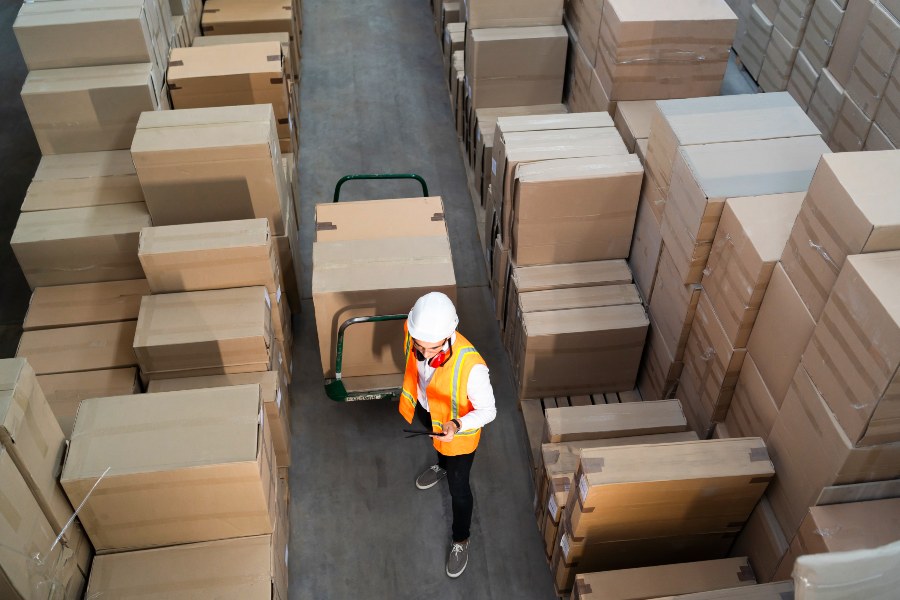
Reverse logistics operations are where reverse logistics strategy becomes tangible: physical nodes, handling capacity, carrier performance, and the discipline to execute a consistent supply chain process under variable demand. As the global reverse logistics market expands, driven largely by ecommerce businesses, higher customer expectations, and shorter product life cycle trends, many organisations discover that their forward logistics network is not automatically fit for reverse flows. A robust reverse logistics process requires deliberate design, because reverse shipments are less predictable, more condition-dependent, and more prone to value erosion than traditional logistics.
At an operational level, the building blocks are straightforward: network design, reverse warehousing, transportation, and the systems and standard operating procedures needed to manage reverse logistics at scale. The complexity comes from variability: reasons for return (delivery failure, delivery refusal, remorse, defect), product condition, packaging state, and the commercial decision of whether an item should re-enter inventory management, go to a repair department, move to an outlet store, or be routed to recycling.
A practical operating model usually answers four questions early:
- Where should returns land (which distribution centre or returns hub) to minimise distribution costs?
- How will items be inspected and graded consistently to protect profit margins?
- What are the disposition rules that keep the flow cost-effective?
- What data will be captured so the organisation can reduce costs over time rather than merely processing volume?
Network Design
Network design determines both unit economics and customer experience. The common choice is between a hub-and-spoke model (centralised processing) and regional return centres (decentralised processing). Centralisation simplifies training, tooling, and quality control, but it often increases return shipping time and cost. Regionalisation can improve speed and reduce customer-facing cycle time, but it raises complexity in staffing, systems, and inspection consistency.
Cross-docking for returns is a useful hybrid: items are received, quickly sorted, and routed onward (for resale, repair, or disposal) with minimal dwell time. This approach protects recovery value, particularly for seasonal items and fast-obsolescence categories where processing time directly impacts resale yield.
Key design variables are distance, labour availability, and throughput constraints. Longer transport distances increase cost and extend cycle time; higher labour costs push automation and process simplification; low throughput can make specialised reverse facilities uneconomic. For supply chain management teams, the goal is not only “lowest cost per return,” but also a stable reverse supply chain that can absorb spikes without degrading customer satisfaction or creating excess inventory backlogs.
Warehousing & Handling
Returns handling is not just “receiving in reverse.” Reverse warehousing needs space, workflow discipline, and systems support to prevent bottlenecks and shrinkage. Organisations choose between a dedicated reverse area and a mixed forward- and reverse-logistics model. Mixed operations can be efficient when volumes are modest, but it often creates priority conflicts with forward logistics, especially during peak periods.
Reverse warehouses commonly require:
- A quarantine zone for items pending inspection, compliance checks, or fraud validation
- Grading and documentation stations (photo capture, serial checks, condition notes)
- Repack/relabel capacity (including packaging management and reuse packaging workflows)
- Repair/refurbish benches or staging for third-party reverse logistics services
- Clear location logic in warehouse management software so inventory management remains accurate
Consistency is the differentiator. A standard operating procedure for grading (new/open-box/damaged/defective) reduces disputes, supports faster disposition decisions, and improves customer experience by enabling predictable outcomes (refund vs store credit vs exchange). Without that discipline, reverse logistics operations become a cost sink: rework rises, fraud slips through, and items lose value while waiting.
Transportation & Last-Mile Returns
Transportation design is a major lever because reverse moves are often “one-off” parcels rather than optimised outbound lanes. Parcel-based reverse flows dominate in ecommerce; freight reverse flows appear for bulky goods, B2B, and rented or leased products such as rental equipment. Consolidation opportunities exist, but they require the network and process to support them; otherwise, you simply add delays.
Pickup and drop-off choices also shape customer loyalty. Convenient options can improve customer satisfaction, but they can raise costs if they trigger higher rates of low-value returns. Some organisations deliberately steer customers toward drop points, lockers, or in-store returns to reduce last-mile expense while meeting customer expectations.
Reverse Logistics Cost Drivers & Profitability
Reverse logistics can be one of the most expensive supply chain activities because it combines transportation, uncertain product condition, labour-heavy handling, and value loss. Unlike forward logistics, where products generally move in known quantities and known condition, reverse flows require inspection, decision-making, and often remediation before an item can generate revenue again. When reverse volumes rise, return costs can compress margins rapidly and create business risk across customer disputes, compliance, and brand image.
The primary cost drivers typically include:
- Return shipping: shipping label costs, carrier rates, surcharges, pickup fees, failed pickup attempts
- Handling and processing: receiving, inspection, repackaging, restocking labour, and space
- Value erosion: markdowns, damage, obsolescence, and missed selling windows
- Risk costs: fraud, chargebacks, dispute management, and documentation effort
- End-of-life costs: disposal, recycling, compliance fees, and partner charges
- Systems overhead: tooling, integrations, and the operational burden of maintaining accurate data across logistics processes
Cost Reduction Strategies
Cost reduction is most effective when it combines prevention, smarter routing, and fewer touches, without undermining customer experience. High-performing programs typically focus on:
- Prevention upstream: richer product content, sizing tools, QA, and packaging improvements to reduce avoidable returns
- Policy tuning: return window design, eligibility rules, and exchange-first or store credit incentives where appropriate
- Smarter routing: sending items to the nearest processing node or direct-to-partner pathways to limit unnecessary moves
- Automation: rule-based approvals, risk-based controls, and warehouse management software workflows that reduce manual handling
- Faster disposition: shortening receipt-to-decision time to protect recovery value and avoid excess inventory buildup
These levers should be tied to profitability, not just cost per return. A “cheaper” process that delays decisions can be more expensive once resale value and future sales impacts are counted.
Reverse Logistics Value & Customer Experience
A solid reverse logistics plan is not purely defensive. Effective reverse logistics can improve customer satisfaction, protect customer loyalty, and create a competitive advantage, especially when competitors treat returns management as a necessary nuisance.
Reverse logistics and customer experience are tightly linked: fast, transparent outcomes reduce support load and increase repeat business. Inventory recovery improves when items are processed quickly and routed correctly, enabling resale, refurbishment programs, and efficient further distribution across secondary channels. Finally, reverse logistics contribute to environmental sustainability by reducing waste, improving material recovery, and enabling reuse, packaging and take-back programs, outcomes that increasingly matter to customers and enterprise buyers alike.
In short, reverse logistics is not only a cost centre to be contained; it is an operational capability that, when designed well, can reduce costs, protect margins, and reinforce the end-to-end supply chain.
Reverse Logistics Metrics & Performance Tracking

Reverse logistics performance is difficult to improve unless it is measured end-to-end. A robust reverse logistics process generates multiple “truths” across customer service, carriers, warehouse operations, finance, and sustainability teams, so reverse logistics management needs a consistent KPI set that ties operational speed to cost, recovery value, and customer experience. The objective is not reporting for its own sake; it is to identify friction points that increase return costs, reduce profit margins, and undermine customer satisfaction and customer loyalty.
Core reverse logistics KPIs typically include:
- Return rate by SKU, sales channels, and return category (e.g., damaged, defective, not as described, remorse)
- Cycle time (request-to-refund; receipt-to-disposition) and on-time performance against internal targets
- Cost per return and cost as a percentage of order value, segmented by transport mode and node
- Recovery rate/value (resale yield) and time-to-resale for eligible items (including outlet store pathways)
- Restock rate plus refurbish/repair success rate for items routed to a repair department
- Fraud/abuse indicators (empty-box, wardrobing, counterfeit swaps) and dispute rate/chargeback exposure
- Customer metrics such as CSAT/NPS for the return process and “where is my refund” contact rate
- Disposition mix (restock, repair, resale, recycle, destroy) and associated environmental impact measures where relevant
Well-run programs also separate forward and reverse logistics economics. A fast outbound experience can mask reverse bottlenecks until volumes spike; KPIs make those hidden constraints visible to supply chain professionals.
Reporting by Return Reason Codes
Reason codes are the bridge between reverse logistics operations and upstream fixes. A reason taxonomy should be consistent enough to compare trends over time, but granular enough to pinpoint root causes (product content, sizing, packaging management, carrier handling, delivery failure patterns, or supplier defects). A practical rule: reason codes should be easy for an end customer to select and robust enough for internal analytics; otherwise, collecting data becomes noisy, and the organisation remains blind to preventable returns.
When reason codes are trustworthy, they improve the entire supply chain process. Merchandising teams can address inaccurate descriptions that drive “not as described” returns. Packaging changes can reduce damage-in-transit. Carrier performance issues can be isolated by lane or service level. Over time, this reduces costs and protects brand image by aligning customer expectations with actual product outcomes.
Plan Inventory Like You Plan Revenue
Use inventory forecasting to stay ahead of demand and reduce stockouts, then coordinate every order path with order orchestration for smoother multi-channel fulfilment. Speak with our team on (02) 9090 4747.
Reverse Logistics Software & Automation
Reverse logistics technology exists to reduce manual touches, improve visibility, and enforce consistent decisions across the reverse supply chain. Most companies do not need a complex “new stack” immediately; they need a well-integrated set of systems that supports an effective reverse logistics process from customer initiation through disposition and refund.
A typical reverse logistics software stack includes:
- Returns management systems (RMS) or portals to manage eligibility, return window rules, and customer communications
- Warehouse management software (WMS) to control intake, inspection workflows, location management, and disposition tasks
- Order management systems (OMS) to orchestrate exchanges, store credit, refunds, and policy exceptions across sales channels
- Transportation management systems (TMS) and carrier integrations to generate a shipping label, schedule pickups, and track return shipping events
- Repair/refurb systems (where applicable) to manage service life, parts, and warranty workflows, especially for rented or leased products and rental equipment
Automation is most valuable when it is constrained by policy and risk controls. The goal is speed without leakage, because fast refunds with weak controls can increase business risk and fraud.
Automation Use Cases
The highest-impact automation patterns are usually rules-based and operationally grounded:
- Auto-approval and smart RMAs based on SKU, customer segment, and risk profile
- Dynamic routing to the best processing node (nearest hub, specialist facility, or direct-to-partner)
- Automated disposition recommendations using SKU economics, condition grading, and demand signals
- Refund automation with risk-based holds when inspection evidence is required
Tracking & Visibility
Visibility is both customer-facing and internal. Customers expect timely status updates; internal teams need an audit trail to resolve disputes and manage compliance. Effective tracking typically standardises event milestones (request created, label issued, in transit, received, inspected, dispositioned, refund/credit issued). Photo capture, serial verification, and documented grading support customer experience by making decisions defensible, especially in contested cases.
AI and Analytics in Reverse Logistics
AI and analytics are most useful when they reinforce operational decisions rather than replace them. In practice, analytics can predict the likelihood of return by SKU and segment, flag anomalous behaviour patterns that indicate fraud, and optimise resale pricing and disposition choices to protect profit margins. The limiting factor is data quality: inconsistent reason codes and inspection outcomes will produce confident-looking but unreliable models. For most organisations, the path to value is incremental: stabilise workflows and data capture first, then layer predictive models.
Reverse Logistics Best Practices
A solid reverse logistics plan aligns policy, operations, and systems around a small set of decisions: what is eligible, how items move, how they are graded, and how they are dispositioned. Best practice is less about “more steps” and more about a clear standard operating procedure that removes ambiguity.
Strong programs typically do four things well. First, they define clear policies (eligibility, timelines, condition requirements, and exception paths) that match operational capacity. Second, they standardise warehouse operations for intake and inspection so outcomes are consistent across shifts and sites. Third, they use a decision matrix for disposition (condition × demand × margin × compliance × speed) to keep the flow cost-effective. Fourth, they communicate proactively to improve customer satisfaction, provide pre-return guidance to prevent avoidable returns and post-return updates to reduce support tickets and reinforce customer loyalty.
Reverse Logistics Problems & Common Pitfalls
Reverse logistics fails most often due to capacity, controls, and data. High volume and seasonality can overwhelm reverse logistics operations, creating backlogs that delay refunds and erode recovery value. Fraud and returns abuse can rise when programs optimise solely for convenience. Cross-border returns introduce customs, restricted goods, and long cycle times that inflate return costs and complicate compliance. Finally, poor data quality, especially inconsistent reason codes and missing inspection evidence, prevents root-cause fixes, so the organisation repeats the same problems and treats reverse logistics as an unavoidable cost rather than a competitive advantage.
The common thread is governance. Reverse logistics strategy must be owned as a core discipline within supply chain management, not a series of ad hoc exceptions. When KPIs, systems, and standard operating procedures work together, reverse logistics contribute to lower costs, better customer experience, stronger brand image, and more predictable inventory management outcomes.
Reduce Manual Shipping Work (and Customer Chasing)
Centralise processing with B2C fulfilment and control shipping, tracking, and admin from one place using the SKUTOPIA shipping platform. Speak to our team on (02) 9090 4747.
Reverse Logistics Takeaways & The Next Steps to Take
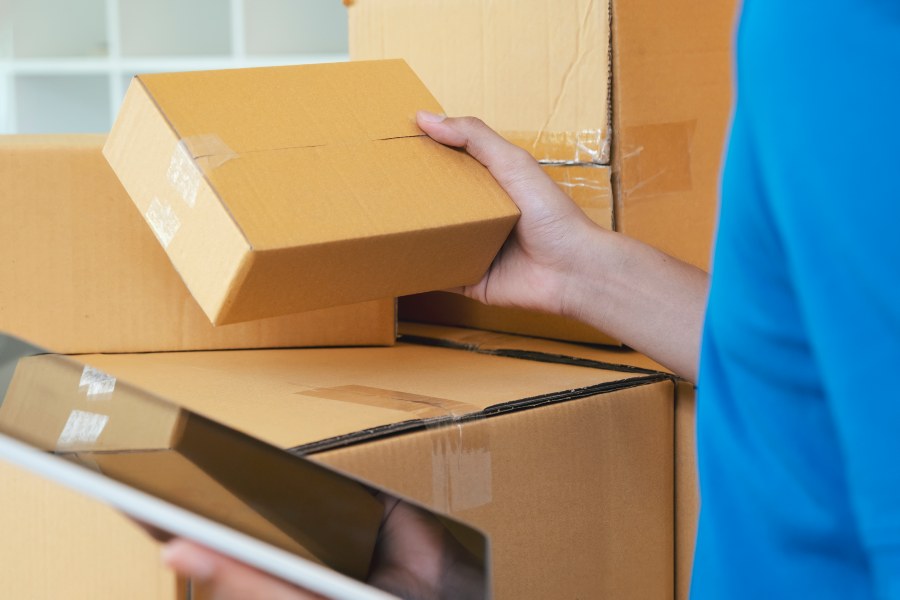
Reverse logistics refers to the reverse supply chain that manages goods after delivery or use, spanning returns management, inspection, disposition, refunds, repair loops, and end-of-life pathways. Done well, it can improve customer satisfaction, strengthen customer loyalty, protect profit margins, and reduce waste.

Fariha Shuvakhana
Fariha Shuvakhana is the Chief Growth Officer at SKUTOPIA, a 3PL fulfilment and shipping platform for fast‑growing eCommerce businesses. Fariha focuses on sustainable, customer‑first growth - aligning go‑to‑market strategy with operational efficiency and partner‑led expansion.