
Why Every Growing Ecommerce Brand Needs a Smarter Inventory Management System for 3PL
A 3PL inventory management system is how Australia's fastest-growing ecommerce brands hand off the complexity of storing, tracking, and fulfilling inventory to a specialist, so they can focus on growth. And if you've ever oversold a product you didn't have in stock, scrambled to locate inventory across multiple locations, or spent your Sunday night packing orders instead of planning your next campaign, you already know the problem.
As consumer expectations continue to rise and sales channels multiply, the complexity of managing inventory in-house grows exponentially. What once worked in a spare bedroom or small warehouse quickly becomes a bottleneck that costs you lost sales, damaged customer relationships, and serious amounts of your own time.
This guide breaks down exactly what a 3PL inventory management system is, how it works end-to-end, the benefits it delivers, the technology that powers it, and how to choose the right third-party logistics partner to support your business growth. Whether you're shipping 200 orders a month or 20,000, this is the foundation you need to scale confidently.
What is a 3PL Inventory Management System?
The Backbone of Outsourced Ecommerce Logistics and Inventory Tracking
A 3PL inventory management system is a technology-driven framework used by third-party logistics providers to receive, store, track, and fulfil a brand's inventory on their behalf. Rather than managing warehouse operations, staff, and software systems yourself, you hand these responsibilities to a specialist, and in return, you gain visibility, accuracy, and time back.
The difference between in-house and outsourced inventory management isn't just about who's packing the boxes. It's about infrastructure. Managing inventory internally means investing in warehouse space, warehouse management software, trained staff, carrier relationships, and systems that talk to your online store. With a third-party logistics provider, all of that exists already, and you plug straight in.
The three core pillars of any 3PL inventory management system are:
- Warehousing - storing your products safely and efficiently
- Order Management - picking, packing, and shipping accurately
- Returns Management - processing and restocking returned items without disruption
These pillars work together to create smooth operations across your entire business.
For an Australian ecommerce brand, say a Shopify store expanding from New South Wales into Victoria and Queensland, this system removes the need to lease new warehouse space in each state. Instead, your third-party logistics provider handles inventory placement strategically across multiple locations, getting your products closer to customers and reducing transportation costs in the process. If the software side of things is what's on your mind, see our breakdown of 5 key features to look for when shopping for order fulfilment software.
The Smarter Way to Fulfil Orders
Explore our Cloud Fulfilment solutions built for growing ecommerce brands - the same infrastructure that helped tbh Skincare ship over 1M units and grow daily orders 20x without the overhead of managing it themselves. Call us today - (02) 9090 4747
How Does a 3PL Inventory Management System Actually Work?
From Receiving Stock to Dispatching Orders: A Complete Overview of the Fulfilment Process
Understanding the day-to-day reality of a 3PL warehouse management system helps you appreciate exactly what you're getting. Here's how it flows from the moment your stock arrives to when it lands at your customer's door.
Receiving Your Inventory
When your products arrive at the 3PL warehouse, the warehouse team checks each shipment against your packing list, inspects items for damage, and counts everything accurately. Each product is then barcoded, labelled, and entered into the inventory management system so it can be tracked in real time throughout the entire fulfilment process. This initial step is critical; it's where inventory accuracy either starts strong or falls apart.
Smart Storage
Once received, products aren't just tossed onto random shelves. A quality 3PL warehouse management system slots inventory based on product size and weight, how frequently items sell, special handling requirements such as fragility, and logical grouping with related products. This strategic approach to warehouse management minimises errors, speeds up picking, and keeps warehouse operations running efficiently.
Real-Time Inventory Tracking
One of the most valuable aspects of a modern 3PL inventory management system is real-time inventory tracking. Live inventory counts sync automatically with your ecommerce platforms, whether that's Shopify, WooCommerce, Amazon, or multiple sales channels at once. Low stock alerts prevent stockouts before they happen, and inventory forecasting tools help you make data-driven decisions about when and how much to reorder. You get complete control over your stock levels without having to physically be in the warehouse.
Order Fulfilment
When a customer places an order on your online store, the management system takes over immediately. Your ecommerce platform sends the order directly to the 3PL system with no manual processes and no delays. The warehouse team receives picking instructions with the exact location of each item, picks and verifies the products, packs them securely according to your packaging requirements, and generates shipping labels.
Packages are then sorted for carrier pickup, and tracking information is sent to both you and your customer. This streamlined fulfilment process is what makes order accuracy rates above 99% achievable.
Returns Management
Returns are an unavoidable part of ecommerce, but a good 3PL turns them into a manageable process. Returned items are received at the facility, inspected, and processed according to your returns policy, whether that means restocking, refurbishing, or disposal. Inventory counts update automatically, and detailed reports on return reasons give you the data-driven approach you need to reduce future returns and improve your products.
Key Benefits of Using a 3PL Inventory Management System
Why Australian Ecommerce Brands Are Choosing 3PL for Business Growth and Increased Customer Satisfaction
The decision to partner with a third-party logistics provider is one of the most impactful moves a growing ecommerce brand can make. Here's why.
Cost Efficiency
Through economies of scale, 3PL providers can offer warehousing, fulfilment, and shipping services at a fraction of what it costs to run these operations in-house. According to the Council of Supply Chain Management Professionals (CSCMP), companies utilising 3PL services can achieve an average logistics cost reduction of up to 11% and an average inventory cost reduction of 6%. When you factor in reduced transportation costs through volume-based carrier negotiations, the savings compound quickly.
Scalability Without the Growing Pains
One month, you're shipping 500 orders; the next, you're running a Click Frenzy promotion and need to scale operations to 5,000. With your own warehouse, that kind of spike is a genuine crisis. With a 3PL, it's handled. The infrastructure, staff, and software solution are already in place. The 3PL simply absorbs the volume, and you capitalise on the opportunity instead of drowning in logistics challenges.
More Time for What Matters
When order processing, inventory tracking, and warehouse management are handled by specialists, you and your team can redirect energy toward product development, marketing, and customer enquiries. This is where real business growth happens, not in the packing room.
Access to Advanced Technology
Quality 3PL software gives you real-time data, comprehensive reporting, and inventory forecasting tools that most small-to-medium ecommerce brands couldn't afford to build independently. With just a few clicks, you can pull detailed reports on inventory turnover, order status, carrier performance, and more. These insights allow you to forecast demand accurately and make smarter restocking decisions.
Improved Order Accuracy and Customer Satisfaction
Manual processes are prone to costly errors. A 3PL warehouse management system that uses barcode scanning, cycle counting, and automated reconciliation consistently delivers inventory accuracy rates above 99%. The downstream effect is straightforward: fewer wrong items shipped, fewer returns, and increased customer satisfaction. According to industry surveys, businesses leveraging 3PL services report a 52% reduction in logistics expenses and a 26% improvement in customer service.
Faster, More Affordable Shipping
Because 3PLs ship for multiple clients at high volumes, they negotiate better rates with carriers like Australia Post, StarTrack and Aramex. Storing inventory across multiple locations, including distribution centres closer to your customer base, means faster delivery times and lower shipping costs per order. That's a direct competitive advantage on your product pages.
Stop Guessing, Start Forecasting
Take the guesswork out of restocking with intelligent Inventory Forecasting tools. Babyboo uses this same forecasting capability to grow order volume 77% while holding a 99.9% same-day dispatch rate, even through peak sale periods. Get started with us today - (02) 9090 4747
The Technology Powering 3PL Inventory Management Systems

WMS, ERP, and SCM: The 3PL Software and Existing Systems Running Behind the Scenes
A 3PL warehouse management system isn't a single piece of software; it's an ecosystem of integrated tools working in concert. Understanding what's under the bonnet helps you ask better questions when evaluating providers.
Warehouse Management System (WMS)
The WMS is the engine of warehouse operations. It manages physical storage locations, stock replenishment, pick-and-pack workflows, and real-time tracking of every item in the facility. A robust WMS software reduces errors, speeds up order processing, and provides the real-time visibility that ecommerce brands depend on. When evaluating a 3PL, their WMS capabilities should be one of your first questions.
Supply Chain Management (SCM) Suites
SCM suites provide a complete overview of the entire supply chain, from raw materials and procurement through to last-mile delivery. These tools integrate supply chain management processes, including demand forecasting, supplier management, and logistics operations planning. For ecommerce brands operating across multiple sales channels or planning to expand, SCM suites are what keep everything coordinated and responsive to change.
Enterprise Resource Planning (ERP) Systems
ERP systems connect inventory management with the broader business processes of finance, HR, and customer relationship management. For third-party logistics providers managing multiple clients, ERP integration ensures that logistics operations don't operate in isolation; they feed into and reflect the health of the entire business. Seamless integration between a 3PL's ERP and your existing systems is what creates that single source of truth for your operation.
Together, these software systems deliver real-time data, automate manual processes, minimise errors, and scale alongside your business. Real-time visibility across all three layers is no longer optional; it's the baseline expectation for any credible 3PL partner.
How to Choose the Right 3PL Partner for Your Ecommerce Brand in Australia
What to Look For in a 3PL Warehouse Management System and Red Flags to Avoid
Choosing the right third-party logistics provider is a significant decision. This is a company that will handle your products, represent your brand through packaging, and directly influence your customer satisfaction. Here's what to assess.
Seamless Integration with Your Ecommerce Platforms
Your 3PL's management system needs to connect cleanly with your existing systems, whether that's Shopify, WooCommerce, Amazon, or whichever ecommerce platforms you use. Seamless integration means orders flow automatically, inventory levels update in real time, and you're never manually reconciling data between systems. Ask specifically about their integration capabilities before committing.
Scalability for Business Growth
Your 3PL should be able to grow with you, not cap your potential. Ask about their capacity during peak periods, how they've helped similar brands scale operations, and whether their contracts are flexible enough to accommodate your growth trajectory.
Verified Accuracy Rates
Request data on their picking accuracy and on-time fulfilment rates. Top-performing 3PLs maintain order accuracy rates above 99%. These numbers directly affect your customer orders and customer satisfaction, so don't take them at face value. Ask for evidence.
Specialised Handling Capabilities
Does your product require secure storage, fragile-item handling, or specific packaging requirements? Make sure your 3PL has the right processes and a trained warehouse team to handle your inventory properly. Using a provider that is not equipped for your product's handling requirements can increase the risk of damage, compliance issues, and added costs.
Transparent Pricing
Understand every fee: receiving, storage, pick-and-pack, order management, and shipping. Hidden fees erode your margins quickly. Look for providers who offer clear, itemised pricing with no surprises.
Comprehensive Reporting and Local Support
Your 3PL should give you comprehensive reporting on inventory turnover, order status, carrier performance, and returns, not just raw numbers, but actionable insights. And when something goes wrong, you want local support that can respond quickly, not an offshore help desk. For Australian ecommerce brands, working with a provider who understands the local logistics landscape is a genuine advantage.
Red Flags to Watch For
Be cautious of 3PLs with outdated systems that can't offer real-time tracking, rigid contracts with no flexibility, weak or vague reporting, and little demonstrated experience in your product category. If a provider can't answer basic questions about their WMS software or integration capabilities, that's a sign their technology won't support your growth.
Is Your Ecommerce Brand Ready for a 3PL Inventory Management System?
The Signs You've Outgrown DIY Fulfilment and Inventory Strategies
Not every brand needs a 3PL today, but many need one sooner than they think. Here are the clearest signals that it's time to make the move:
- You're shipping more than 100 orders per month
- Your storage space is consistently maxed out
- Fulfilment tasks are eating into time that should go toward inventory strategies, marketing, or product development
- You're experiencing stockouts, overselling, or an uptick in returns
- You plan to expand into new markets or add new sales channels
- Seasonal spikes like EOFY or Click Frenzy are hard to manage without costly errors
- You need better real-time visibility into your inventory levels
On the other hand, if you're still validating product-market fit, shipping fewer than 50 orders per month, or running on extremely thin margins, it may be worth waiting until the fundamentals are stronger. The right time to bring in a 3PL is when logistics operations are starting to slow your business growth, not before.
Your Trusted 3PL Partner in Sydney and Melbourne
From warehousing to last-mile delivery, our third-party logistics solutions in Sydney and Melbourne are built to scale with your ecommerce brand like Boost Lab scaled processing capacity 5x while cutting fulfilment costs by 50%. Call us now - (02) 9090 4747
Smarter Stock, Stronger Growth: Master Your 3PL Inventory Management System Today
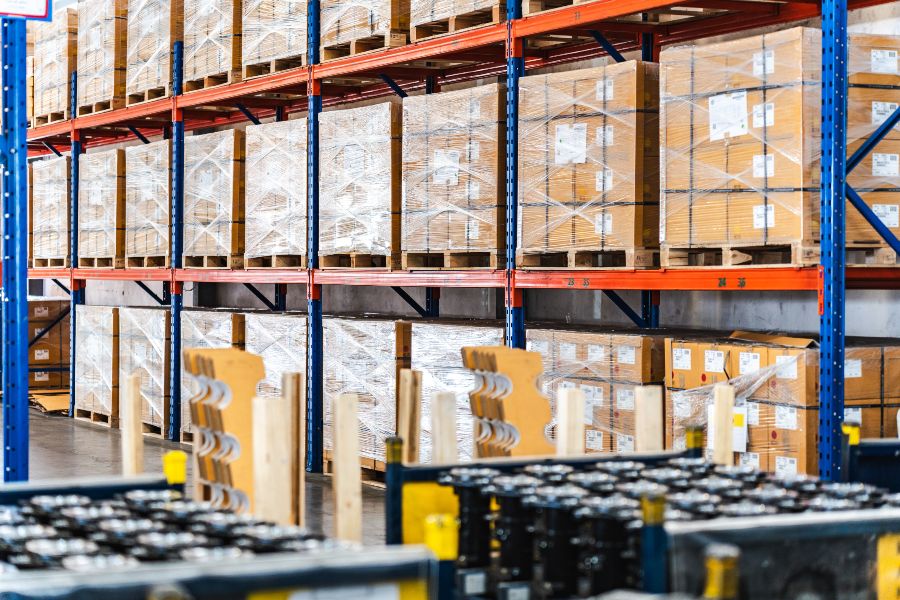
Inventory management isn't just an operational detail; it's one of the most powerful levers for ecommerce success. A well-implemented 3PL inventory management system gives you real-time inventory tracking, seamless integration across your sales channels, and the warehouse management infrastructure to scale operations without the risk of costly errors or customer satisfaction issues.
The brands that win in ecommerce aren't necessarily those with the best products. They're the ones who can get the right product to the right customer at the right time, consistently. A 3PL partner with the right management system is how you make that happen, without building the warehouse, hiring the warehouse team, or managing the software systems yourself.
SKUTOPIA is purpose-built for Australian ecommerce brands ready to take that next step. With advanced 3PL software, seamless integration with leading ecommerce platforms, and local support that understands the Australian supply chain, SKUTOPIA gives you complete control over your inventory with none of the operational overhead.
Your inventory shouldn't be the thing holding your business back. Make it your competitive advantage. Contact SKUTOPIA today!

Fariha Shuvakhana
Fariha Shuvakhana is the Chief Growth Officer at SKUTOPIA, a 3PL fulfilment and shipping platform for fast‑growing eCommerce businesses. Fariha focuses on sustainable, customer‑first growth - aligning go‑to‑market strategy with operational efficiency and partner‑led expansion.