
Your best-selling product just hit zero, a stockout no importer plans for. The next shipment is still on a boat somewhere near Singapore, three weeks out. Every day it sits at sea, you lose sales, and your product page slides down the search rankings.
Sound familiar? For Australian importers, this is the hardest part of inventory management. Long sea-freight lead times from Asia break the simple reorder maths that works fine for a local supplier. Businesses that rely on overseas manufacturing can't afford to wing it: one missed reorder, and customer demand goes unmet for weeks.
This guide fixes that. You'll get the safety stock and reorder point formulas, worked through with real numbers for a single SKU on a 60-day lead time.
What Is a Stockout?
A stockout is when you run out of a certain product and can't fill an order. The item shows as out of stock, the sale stalls, and the customer either waits or buys from someone else.
You'll see the word spelled two ways. "Stockout" as one word is the standard noun. "Stock out" as two words works as a verb, like "we stocked out of that SKU in April." Both are correct. This guide uses "stockout" for the thing and "stock out" for the action.
Examples turn up across eCommerce every week. A skincare brand sells through its hero serum before the replacement order clears customs. A homewares importer runs dry on a popular lamp because the factory in Shenzhen shipped ten days late. Same story each time. Demand is there. Stock isn't.
Importing from Asia and tired of managing fulfilment in-house?
Our 3PL centres in Sydney and Melbourne handle pick, pack and dispatch while you focus on growth. Get started: (02) 9090 4747
What Causes Stockouts, and What They Really Cost
Most stockouts trace back to five causes.
- Demand spikes: A promo, a press mention, or a seasonal rush creates unexpected spikes in orders and pulls stock down faster than you planned. Increased demand over a short time frame is the classic trigger, and managing order spikes is a challenge every growing brand eventually faces.
- Forecast errors: If your demand forecasts are off, every downstream number is off with them. Poor forecast accuracy is one of the most avoidable causes of stockouts.
- Lead-time variability: Your supplier quotes 60 days. Sometimes it's 52, sometimes it's 74. That swing is the silent killer for importers.
- Poor inventory visibility: You can't reorder what you can't see. Stock sitting in transit or unallocated hides the real position.
- Supply issues: External factors like factory hold-ups, port congestion, and customs checks all stretch the timeline in ways no forecast can fully predict.
The cost adds up fast. According to IHL Group's 2026 Inventory Distortion Study, out-of-stocks and overstocks combined cost retailers globally around US$1.7 trillion a year. You lose the immediate sale. You often lose the customer, because shoppers who hit an out-of-stock page rarely wait, and lost revenue compounds quickly when demand fluctuations go unmanaged. Customer satisfaction takes a hit too, and with it, brand loyalty that takes years to rebuild. A thorough stock control strategy is what separates brands that weather demand spikes from those that haemorrhage sales through them.
There's a flip side. Over-order to feel safe, and you tie up cash in excess inventory, pay to store it, and risk it ageing into dead stock. Good inventory management is the balance between those two failures. Hold the right amount to protect sales, not so much that your cash is stuck on a shelf.
The Levers That Prevent Stockouts

Preventing stockouts comes down to a handful of levers that work together across your entire supply chain.
- Demand forecasting: Start with a realistic view of future customer demand. eCommerce demand forecasting, done properly with seasonal trends and demand fluctuations factored in, sets the baseline every other inventory number leans on.
- Safety stock: This is the buffer stock you hold to cover demand and supply surprises. Safety stock helps protect inventory levels during unforeseen circumstances like supplier delays or unexpected spikes in orders. It's the difference between a near miss and lost sales.
- Reorder points: A reorder point tells you the exact stock level that should trigger your next order, so you act on accurate data, not gut feel.
- Cycle counting: Regular counts keep your recorded inventory honest. Bad data breaks good formulas.
- Inventory management software: Modern platforms track inventory levels across your supply chain operations in real time and fire low-stock alerts the moment a reorder point is hit.
How to Calculate Safety Stock
Safety stock is the extra inventory you hold to absorb two kinds of uncertainty: demand that runs hot, and lead time that runs long. Buffer stock sits between you and a stockout when things don't go to plan. Get it right, and you rarely stock out. Get it wrong, and you either bleed sales or bury cash in stock you don't need.
Here's how to calculate safety stock properly, plus a few tips to prevent the buffer from being too small.
Service Level, the Z-Score and the Safety Stock Formula
First, pick a service level. That's the chance you want of not stocking out during a replenishment cycle. A 99% desired service level means you're willing to stock out about 1% of the time. Higher service levels need more buffer stock.
Your service level converts into a Z-factor (also called the desired service factor), drawn from the standard normal distribution.
Now, the formula. When both demand variability and lead time vary, which is the reality for importers, use the full demand-and-lead-time-variability formula, often called King's formula:
Safety stock = Z × √[ (LT × σd²) + (D² × σLT²) ]
Where:
- Z = your desired service factor (from the table)
- LT = average lead time in days
- σd = standard deviation of daily demand
- D = average demand per day (average daily usage)
- σLT = standard deviation of lead time in days
This is the version Oracle NetSuite's inventory optimisation documentation sets out, because it accounts for supply variability, not just demand. That second term under the square root, the one with σLT, is what most simple calculators leave out.
A Worked Example for an Australian Importer
Numbers make this real. Take one SKU, a homewares product shipped by sea from Shenzhen. Here's how companies in this position should think about setting inventory levels for a specific product over a 60-day time period.
Inputs:
- Average daily demand / average daily usage (D): 100 units
- Standard deviation of daily demand (σd): 25 units
- Average lead time (LT): 60 days
- Standard deviation of lead time (σLT): 10 days
- Desired service level: 99%, so Z = 2.33
Work the full formula step by step:
- Inside the brackets: (60 × 25²) + (100² × 10²) = 37,500 + 1,000,000 = 1,037,500
- Square root of 1,037,500 ≈ 1,018.6
- Safety stock = 2.33 × 1,018.6 ≈ 2,373 units
So this SKU needs buffer stock of about 2,373 units at a 99% service level. That's your protection against a demand surge or a shipment that lands two weeks late.
How to Calculate Your Reorder Point
Your reorder point is the stock level that should trigger your next purchase order: the signal to replenish stock before you run dry. The formula is straightforward:
Reorder point = (Average daily demand × Average lead time) + Safety stock
Using the same SKU:
- Lead-time demand = 100 × 60 = 6,000 units
- Reorder point = 6,000 + 2,373 = 8,373 units
When stock drops to 8,373 units, you order. That covers expected customer demand across the 60-day time frame, plus the safety stock buffer for the surprises.
One detail trips people up. Trigger the reorder on your inventory position, not just physical stock on hand.
Inventory position = on-hand + on-order − committed (or backordered)
If you only watch the stock sitting in the warehouse, you'll double-order when a shipment is already on the water, or under-order when units are promised to existing orders. Inventory position gives you the true picture, and it's the metric supply chain professionals rely on to maintain healthy inventory levels across a specific time period.
What happens if you set the reorder point too low? You hit the trigger too late. Replenishment can't arrive before your buffer runs out, and you stock out during the very window the reorder point was meant to protect.
Why the Simplified Formula Fails Importers
Plenty of online calculators use the simplified safety stock formula. It assumes lead time is stable and only demand varies:
Simplified safety stock = Z × σd × √LT
Run our SKU through it:
- Safety stock = 2.33 × 25 × √60 ≈ 451 units
Look at that gap. The full formula says hold 2,373 units. The simplified one says 451. That's a shortfall of roughly 1,922 units.
For a local supplier with a steady three-day lead time, the simplified formula is fine. For an importer waiting 60 days on the ocean, where the lead time itself swings by weeks, it dangerously under-buffers. Lead-time variability is the biggest driver of risk across your supply chain, and the simplified formula ignores it completely. Understanding how to manage supply chain disruption and risk is essential background for any importer setting safety stock on long sea-freight lanes.
A tip for your critical SKUs: don't stop at the statistical number. Stress-test it against a "maximum credible lead time." Ask what happens if demand runs 20% hot and transit stretches to 85 days. Shipping delays have a long tail that a neat bell curve tends to understate, so a manual worst-case check keeps your hero products safe.
See Your Stock and Orders in One Place
SKUTOPIA's AI-powered robotic fulfilment gives you unified visibility of inventory and orders in one dashboard, with speed and precision built in. Chat with one of our 3PL solutions experts: (02) 9090 4747
Setting the Right Safety Stock Levels Without Tying Up Cash
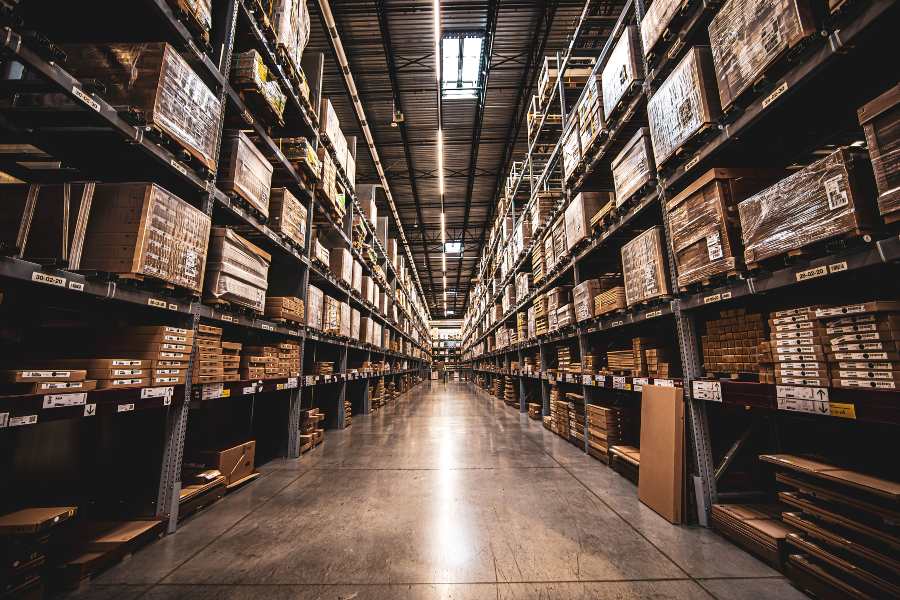
More safety stock isn't always better. Every unit of buffer costs money to store and locks up cash flow you could spend elsewhere. Too much safety stock inflates your inventory value unnecessarily and quietly erodes margin. The real job is setting levels that protect sales without drifting into excess, exactly the kind of balance a 3PL partner can help you strike at scale.
Start with your service level, and set it per SKU rather than across the board. A hero product that drives most of your revenue might justify a 99% desired service factor. A slow, low-margin line rarely does. Matching the service level to the SKU is the fastest way to trim inventory costs without raising stockout risk where it actually hurts.
Gartner recommends avoiding simplistic inventory approaches and analysing inventory decisions by risk, reliability, supply constraints and SKU-level context, which is exactly why per-SKU service levels matter.
Watch two traps along the way:
- Fixed safety stock: A flat buffer you set once and forget drifts out of date as demand shifts. You end up overstocked on slow lines and short on the fast movers. Companies that set buffer stock once and never revisit it are essentially flying blind.
- Excess safety stock: This is the mirror image of a stockout. It quietly eats margin and warehouse space while it sits, and it's easy to miss because nothing looks broken.
Review your safety stock levels each quarter against fresh demand data. Lead times move, demand shifts, and last season's buffer is rarely this season's. Small, regular adjustments beat one big annual reset.
A Smarter Approach: Automating Your Reorder Alerts
Formulas are only useful if someone acts on them. The weak link in most inventory management is human. Reorder points quietly get crossed while everyone's busy, and the first sign of trouble is an empty shelf.
This is where a 3PL inventory management system earns its keep. A good platform gives you real-time visibility across inventory levels, tracks inventory position, and fires a low-stock alert the moment a specific product hits its reorder point. No manual stocktake. No spreadsheet someone forgot to open. The trigger just fires, and the reorder happens on time. Modern tools even use machine learning to refine demand forecasts over time.
It's the kind of thing you notice when you run fulfilment at scale. SKUTOPIA operates its own robotic fulfilment centres in Sydney (Alexandria) and Melbourne (Altona), and its inventory forecasting alerts you when stock is low and flags replenishment needs early, so a fast-moving SKU doesn't slip to zero between counts. The platform connects to 100+ delivery services and is built to scale with a merchant, from 10 orders today to 10,000 tomorrow, so your reorder logic keeps working as volume climbs.
The point isn't the technology for its own sake. It's that automating the trigger removes the one step in your supply chain operations most likely to fail.
Frequently Asked Questions
Is it "stock out" or "stockout"?
Both are correct. "Stockout" as one word is the standard noun for running out of a product. "Stock out" as two words is the verb, as in "we stocked out last week."
Which are examples of a stockout?
A skincare brand selling through its hero serum before the next order clears customs. A homewares importer running dry on a popular lamp after a factory delay. Any time an order exists but the stock to fill it doesn't.
What is King's formula for safety stock?
King's formula is the demand-and-lead-time-variability safety stock formula: SS = Z × √[(LT × σd²) + (D² × σLT²)]. It accounts for both demand variability and lead-time variability, which makes it the right choice for importers.
How is the reorder point calculated?
Reorder point = (average daily demand × average lead time) + safety stock. Trigger the order on your inventory position, which is on-hand plus on-order minus committed stock.
What happens if the reorder point is too low?
You reorder too late. New stock can't arrive before your buffer runs out, so you stock out during the replenishment window the reorder point was meant to cover.
What is EOQ and its formula?
Economic order quantity (EOQ) is the order size that minimises total ordering and holding costs. The formula is EOQ = √(2DS ÷ H), where D is annual demand, S is the cost per order, and H is the holding cost per unit per year. The reorder point tells you when to order; EOQ tells you how much.
What is the 80/20 rule in inventory?
The 80/20 rule, or Pareto principle, is the observation that roughly 80% of your sales come from about 20% of your SKUs. Focus your tightest safety stock and reorder-point discipline on that critical 20% first.
What is the 50% rule for safety stock?
The 50% rule is a rough rule of thumb, not a precise method. It sets buffer stock at about half of your average lead-time demand: multiply average daily usage by average lead time, then halve the result (QuickBooks, 2018). It's a quick starting point, but it ignores demand variability and lead-time swings. For an importer with unpredictable sea-freight lead times, the statistical safety stock formula above is far safer.
Get a Fulfilment Plan Built Around Your SKUs
Ready to hand off fulfilment and let the system run your reorder logic? Talk to a 3PL partner and get a plan built around your SKUs. Contact us today: (02) 9090 4747
Stop Stockouts Before They Start: Calculate Safety Stock and Automate the Rest
Stockouts aren't bad luck. They're a maths problem, and the maths is solvable. Set a service level, calculate your safety stock with the full formula, and turn that into a reorder point you can act on.
The one rule to remember: when your lead times vary, and for importers they always do, use the full safety stock formula. The simplified version quietly under-buffers your most important products. Our worked SKU needed 2,373 units of safety stock, not 451. That gap is the difference between a smooth restock and weeks of lost revenue.
Then take the human error out of it. Supply chain professionals who rely on manual processes are one busy week away from a stockout. Automate the reorder trigger so the alert fires the moment stock hits the line, every time. Run the numbers on your hero SKU this week, and let the system maintain the rest.

Fariha Shuvakhana
Fariha Shuvakhana is the Chief Growth Officer at SKUTOPIA, a 3PL fulfilment and shipping platform for fast‑growing eCommerce businesses. Fariha focuses on sustainable, customer‑first growth - aligning go‑to‑market strategy with operational efficiency and partner‑led expansion.