
Is Your Business Ready to Outsource 3PL Warehousing and Distribution, But Not Sure Where to Start?
If you're running a growing eCommerce business, there's a good chance that 3PL distribution has crossed your mind. Maybe you've outgrown your own warehouse, maybe shipping delays are costing you your customers, or maybe you're simply spending more time managing logistics than actually running your business. Whatever the trigger, you're not alone, and you're asking the right questions.
Choosing the right third-party logistics partner is one of the most consequential decisions an eCommerce business owner can make. Get it right, and you unlock faster delivery, lower costs, and the freedom to focus on growth. Get it wrong, and you're dealing with stockouts, unhappy customers, and extra costs that quietly eat into your margins.
To help you avoid the latter, we've put together the 10 essential questions to ask before signing on the dotted line with any third-party logistics provider. Here's a quick look at what we'll cover:
- What is the size and reach of your distribution network?
- What 3PL services do you offer, and what makes you different?
- What key metrics do you track, and what are your SLAs?
- How do you handle supply chain disruptions and demand surges?
- How is your pricing structured, and are there hidden fees?
- What does your customer support model look like?
- What types of clients have you worked with?
- What technology and system integration do you support?
- How do you manage inventory levels and reporting?
- Are you equipped to support my business as it scales?
What Is 3PL Distribution and Why Does Getting It Right Matter?
The Real Cost of Getting Your Third-Party Logistics Decision Wrong
Third-party logistics refers to outsourcing your warehousing and distribution operations, including receiving, storage, pick and pack, freight, order fulfilment, and returns, to a specialist logistics service provider. Rather than managing these logistics processes in-house, you hand them over to a company with the infrastructure, expertise, and systems built specifically for the job. For a fuller breakdown of the model, see our guide to what a 3PL actually is.
The global 3PL market is on a strong growth trajectory, with revenue projected to reach US$1.44 trillion by 2028, growing at a compound annual growth rate (CAGR) of 2.71% between 2023 and 2028. That growth is being driven largely by eCommerce, which is a major driver of 3PL demand globally, with a significant and growing share of fulfilment outsourced to third-party logistics providers, particularly among small and mid-sized retailers.
In Australia, the pressure is just as real. Customers expect fast, reliable delivery as standard and third-party logistics services have become a critical lever for businesses looking to compete. But with so many 3PL warehouses and logistics companies to choose from, the quality and capability of providers vary enormously. Partnering with the wrong one doesn't just slow you down. It can damage your reputation with customers and add unnecessary costs to every order you ship.
From Pick and Pack to Same Day Delivery, We've Got You Covered
Our Pick and Pack Solutions and Same Day Delivery Services are designed to keep your customers happy and your orders moving - the same combination that helped Babyboo hit 99.9% same-day dispatch and 77% order growth. Contact us today - (02) 9090 4747
Signs Your Business Is Ready for a 3PL Logistics Partner
When to Make the Move From DIY Fulfilment to Outsourced Distribution Services
Not every business is ready for third-party logistics services from day one, but there are clear signals that the time has come. Ask yourself:
- Are you running out of storage space? When inventory outgrows your current setup, whether that's a spare room, a garage, or a leased warehouse, it's a strong sign you need a more scalable solution. Inventory carrying costs can account for up to 20% to 30% of a company's total logistics costs, making efficient warehousing a genuine financial priority.
- Are you shipping more than 100 orders per month? At this volume, it becomes difficult to manage warehouse operations manually without sacrificing efficiency or accuracy.
- Could your current setup handle a sudden demand surge? If a viral moment or seasonal spike hit tomorrow, could you scale your fulfilment process fast enough to meet it?
- Is logistics pulling you away from your core business? If you're spending more time managing shipping than developing products or serving customers, that's a signal worth listening to.
If you answered yes to any of the above, outsourcing to a third-party logistics provider could be the move that unlocks your next stage of growth.
Top 10 Questions to Ask Before Choosing a 3PL Distribution Company

1. What Is the Size and Reach of Your Distribution Network?
The scale of a 3PL's distribution network directly affects how fast and cost-effectively you can deliver to your customers. A large network of 3PL warehouses positioned close to your end customers means shorter transit distances, faster delivery times, and lower freight costs.
When evaluating a party logistics provider, ask specifically about:
- The number and location of fulfilment centres and warehouses
- Whether they have coverage in the Australian metro areas most relevant to your customer base, including Sydney, Melbourne, Brisbane, and Perth
- Their international reach, if you're planning to expand beyond Australia
The closer your inventory sits to your customers, the more timely your delivery and the better your customer satisfaction scores will be as a result.
2. What 3PL Services Do You Offer and What Makes You Different?
Most third-party logistics companies offer a standard suite of services: pick and pack, warehousing, freight, returns management, and inventory management. But the real question is what makes their offering genuinely different?
Look for a third-party logistics provider that goes beyond the basics. Value-added services like kitting, customisation, or advanced order management system capabilities can make a meaningful difference to your operations. Ask whether they use warehouse robotics or automation, what carrier relationships they've built, and whether they offer tailored package solutions that match your exact needs rather than a one-size-fits-all approach.
A third-party logistics provider worth partnering with should be able to articulate clearly what they do better than their competitors and back it up with evidence.
3. What Key Metrics Do You Track and What Are Your SLAs?
This is where you separate professional 3PL logistics operations from those that are winging it. A reputable third-party logistics provider should track and be willing to share performance data across the following metrics:
- Dock-to-stock times: How quickly inbound inventory is processed and made available for order fulfilment
- Cut-off times: The daily deadline for orders to be processed and shipped same-day
- On-time shipping rate: The percentage of orders that leave the warehouse on schedule
- Order accuracy: The percentage of orders fulfilled without errors
- Inventory accuracy: How closely recorded stock levels match physical inventory in the 3PL warehouse
- On-time delivery performance: The percentage of orders that arrive at customers by the promised date
Ask what their service-level agreements (SLAs) are across these metrics and whether they're currently meeting them. Complete transparency here is non-negotiable. If a party logistics provider can't or won't share this data, treat it as a red flag.
4. How Do You Handle Supply Chain Disruptions and Demand Surges?
Supply chain volatility is a fact of life in eCommerce. Seasonal demand spikes, freight delays, supplier shortages, and market conditions can all throw a wrench into even the most well-planned logistics processes. Your 3PL partner needs to be equipped to absorb that disruption without passing the chaos on to you or your customers.
Ask prospective third-party logistics service providers:
- Do you have contingency plans for freight or supplier disruptions?
- Can you scale warehouse operations and staffing rapidly during peak periods?
- How have you managed demand surges for similar clients in the past?
Effective supply chain management in volatile conditions is a true test of a 3PL's capability, and their answer will tell you a lot about how they'll perform when it really matters.
5. How Is Your Pricing Structured, and Are There Hidden Fees?
Pricing is often where businesses get caught out. Before committing to any third-party logistics provider, you need a clear, line-by-line understanding of their cost structure. There are two common pricing models in the 3PL services market:
- Per-service pricing: Pick, pack, and shipping are charged as separate line items
- All-inclusive per-unit pricing: A single bundled fee covers the full fulfilment process
Each model has its merits depending on your order profile and business requirements. What matters most is that you understand exactly what you're paying for and what you're not. Ask specifically about receiving fees, long-term storage surcharges, account management fees, peak season surcharges, and any extra costs that don't appear on the standard rate card.
Also, clarify whether you're being locked into a long-term contract or whether the provider offers flexible, pay-as-you-go pricing. Cost effectiveness improves significantly when your costs scale with your actual order volume, rather than a fixed overhead you're paying regardless.
No Lock-In Contracts. No Nasty Surprises
Our Cloud Fulfilment platform gives you flexible, transparent pricing that scales as your order volumes grow, so you only pay for what you need - the same model that helped Boost Lab cut fulfilment costs by 50%. Call us now - (02) 9090 4747
6. What Does Your Customer Support Model Look Like?
The best party logistics services providers don't just manage your warehousing and distribution. They act as an extension of your team. That means being available when things go wrong, and proactive when there's an opportunity to improve.
Look for a 3PL that offers support on two levels:
- Day-to-day issue resolution: Fast, reliable support for order errors, inventory discrepancies, or fulfilment delays, with clearly defined response times and a dedicated team you can actually reach
- Strategic planning: Regular check-ins with key stakeholders to review performance, plan for seasonal demand, and identify opportunities to improve your logistics processes
Ask whether they use automated tools alongside human support, and what their escalation process looks like. A strong, responsive support model is what separates a genuine logistics partner from a company that's hard to reach the moment something goes sideways.
7. What Types of Clients Have You Worked With?
A third-party logistics provider's client history is one of the most reliable indicators of whether they'll be a good fit for your business. Ask for case studies or references from businesses that are similar to yours in terms of size, industry, product type, and geography.
Strong relationships with clients in your space signal that the 3PL understands your specific challenges. It also suggests they've already worked through many of the growing pains you're likely to encounter. If a provider can't share relevant success stories or seems reluctant to connect you with existing clients, that warrants caution.
8. What Technology and System Integration Do You Support?
In today's eCommerce environment, your 3PL warehouse and your online store need to communicate seamlessly. System integration among your order management system, inventory management platform, and the 3PL's warehouse management system keeps your operations running smoothly and your data accurate.
Before committing, confirm that the 3PL integrates with your existing technology stack, whether that's Shopify, WooCommerce, Magento, or another platform. Ask about their API capabilities, how they handle order automation, and whether they offer a client-facing portal that gives you real-time visibility into your inventory levels and fulfilment process.
A cloud-based, digitally mature 3PL logistics provider reduces manual errors, speeds up processing, and ensures your management system becomes a single source of truth across all your sales channels.
9. How Do You Manage Inventory Levels and Reporting?
Accurate, real-time inventory management is fundamental to running a healthy eCommerce business. Poor visibility into your stock can lead to stockouts, overselling, and the kind of customer experience issues that are very difficult to recover from.
When evaluating third-party logistics services, ask:
- Can I access live inventory levels across all warehouse locations?
- Do you provide automated low-stock alerts?
- Is historical consumption and order data available for forecasting?
- Do you support multi-channel inventory management across different sales platforms?
The ability to manage and monitor inventory with utmost care, including barcode-driven receipting, version control, and online reporting, is a sign of a mature, well-run 3PL operation. Safe storage of your goods is the baseline; real-time visibility is what actually helps you make better decisions.
10. Are You Equipped to Support My Business as It Grows?
The right 3PL doesn't just serve your business as it is today. It's built to grow with you. As your order volumes increase and your market expands, your logistics partner needs to scale alongside you without skipping a beat.
Ask prospective providers about their capacity ceiling, how they've supported fast-growing clients through periods of rapid expansion, and whether their infrastructure can accommodate your business requirements 12 or 24 months from now. If you have ambitions to expand into international markets, find out whether their distribution services extend beyond Australian borders.
A party logistics provider that can only serve you at your current size isn't a long-term partner. They're a short-term fix. The goal is to find a 3PL whose resources, expertise, and technology scale as your business grows.
Faster Fulfilment Is Closer Than You Think
Our Third-Party Logistics Provider (3PL) solutions are designed to help Australian eCommerce brands scale without the stress - just like tbh Skincare, who shipped 1M+ units and grew daily orders 20x. Visit our Sydney and Melbourne fulfilment centres. Contact us today - (02) 9090 4747
Partner Smarter: Find a 3PL Distribution Company That Delivers for Your Australian eCommerce Business
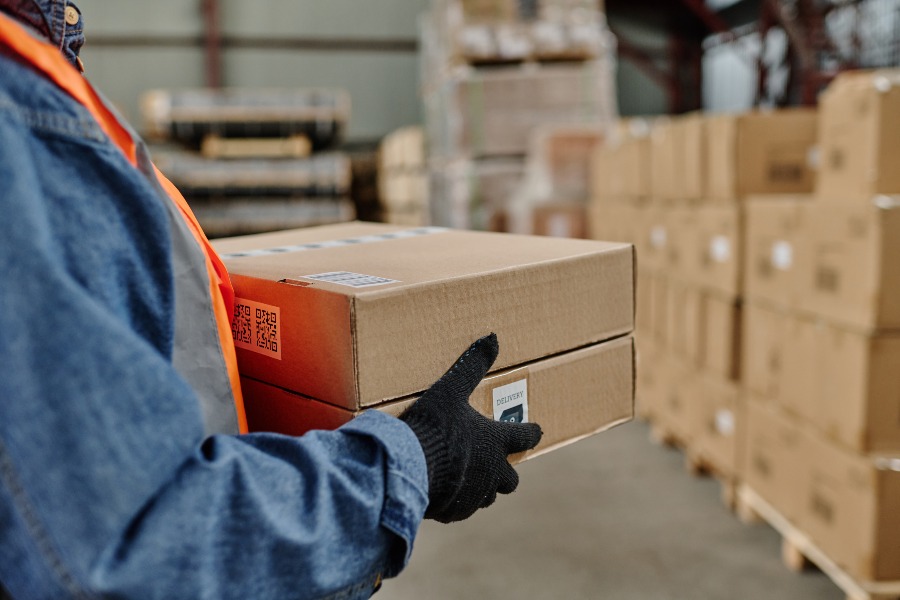
Choosing a third-party logistics provider is not a decision to rush. The right partner will help you deliver to customers faster, manage inventory more accurately, reduce costs, and free up your time to focus on what you do best, which is growing your business.
The 10 questions above give you a structured framework to evaluate any party logistics provider with confidence. Use them to probe beneath the surface, compare providers honestly, and make sure the 3PL you choose is genuinely equipped to support your exact needs, not just today, but as your business evolves.
At SKUTOPIA, we've built our 3PL services specifically for Australian eCommerce brands that are ready to scale. From our warehousing and distribution network to our real-time inventory management technology and dedicated team of logistics specialists, we provide businesses with the tools, transparency, and support they need to deliver an exceptional customer experience every single time.
Ready to find out if SKUTOPIA is the right fit for your business? Get started today to talk about what a tailored logistics solution could look like for you.

Fariha Shuvakhana
Fariha Shuvakhana is the Chief Growth Officer at SKUTOPIA, a 3PL fulfilment and shipping platform for fast‑growing eCommerce businesses. Fariha focuses on sustainable, customer‑first growth - aligning go‑to‑market strategy with operational efficiency and partner‑led expansion.