The Future of Warehousing is Here
Automated warehouse robots are revolutionising the way Australian businesses approach logistics and fulfilment operations. As e-commerce continues its explosive growth and labour shortages persist across the nation, warehouse automation has emerged as the critical solution for maintaining a competitive advantage. From Sydney's bustling distribution centres to Melbourne's expanding fulfilment centres, businesses are discovering that robotic systems aren't just a futuristic concept; they're increasingly essential for staying competitive, especially in high-volume e-commerce operations in today's demanding marketplace.
The transformation is remarkable: what once required dozens of warehouse workers trudging through endless aisles can now be accomplished by sophisticated robots that never tire, never call in sick, and work with highly consistent accuracy on repetitive tasks, often matching or exceeding human precision in structured workflows. This isn't about replacing human labour entirely; it's about redefining warehouse automation to create safer, more efficient operations where technology amplifies human potential whilst handling the most physically demanding and repetitive tasks.
Modern robots automate complex workflows whilst improving warehouse efficiency across large warehouses, enabling businesses to streamline operations, save storage space, and reduce labour costs significantly.
For the fundamentals of how this technology works end-to-end, see our guide to robotic fulfilment.
What Are Automated Warehouse Robots?
Understanding Mobile Robots and Automated Storage Technology Revolution
Warehouse robotics represents a sophisticated blend of autonomous machines designed to replace or augment human effort in modern fulfilment centres. These aren't simply automated trolleys following predetermined tracks; today's warehouse robots are intelligent, adaptive systems comprising two critical components: specialised hardware engineered to perform tasks ranging from transporting goods to automatic storage operations, and advanced software that controls their operations with remarkable precision.
Modern warehouse robots integrate advanced technologies, including artificial intelligence, machine learning algorithms, advanced vision systems, computer vision systems, and barcode scanners. These robotic systems can navigate complex warehouse environments, make real-time decisions about efficient routes, and can reduce exposure to some manual-handling and vehicle hazards when properly designed, risk-assessed, and controlled.
Unlike traditional robots that were bolted to factory floors and performed only the simplest preplanned motions along predefined paths, contemporary warehouse robotics solutions are mobile, adaptable, and capable of handling delicate items or reconfiguring entire warehouse layouts based on demand patterns.
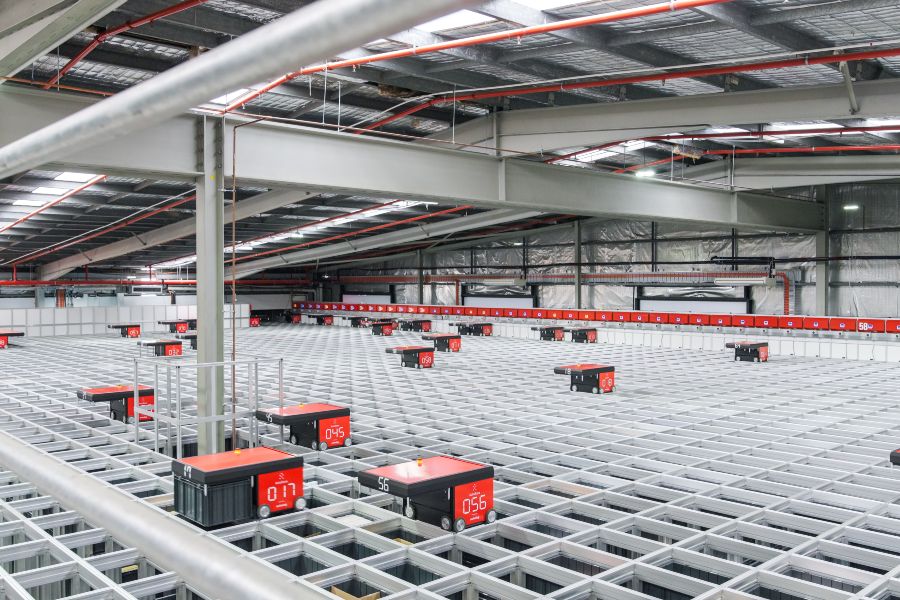
In NSW, leading examples include Amazon's robotics fulfilment centre at Kemps Creek in Western Sydney, which uses large fleets of robots carrying shelving units throughout the warehouse, and Coles' automated Customer Fulfilment Centre in Wetherill Park, powered by advanced Ocado technology for online grocery orders.
Evolution of Warehouse Automation
The evolution of warehouse robotics has been driven by significant technological breakthroughs. Companies like Amazon Robotics (formerly Kiva Systems), acquired by Amazon in 2012, pioneered many of the mobile robot technologies now standard across the industry. Advanced sensors now enable robots to detect obstacles and navigate around them safely, whilst sophisticated warehouse management systems coordinate multiple robots simultaneously to improve efficiency. Some modern robots can even handle the complex task of unloading shipping containers, a job that was considered extremely difficult to automate until recently.
These automated systems work tightly integrated with existing warehouse management systems to create an integrated ecosystem. When inventory levels drop, or order patterns change, the warehouse management software can direct robots to reslot products, move entire shelving units, or prioritise specific picking routes, all without disrupting ongoing operations or requiring manual intervention from human operators.
Unlock Robotic Fulfilment with SKUTOPIA
Discover our Robotic Order Fulfilment Solutions and turn slow, manual processes into fast, scalable, high-accuracy operations - the same infrastructure that helped Boost Lab scale processing capacity 5x while cutting fulfilment costs by 50%. Talk to our experts today - (02) 9090 4747
Warehouse Robotics Explained: How Modern Systems Work
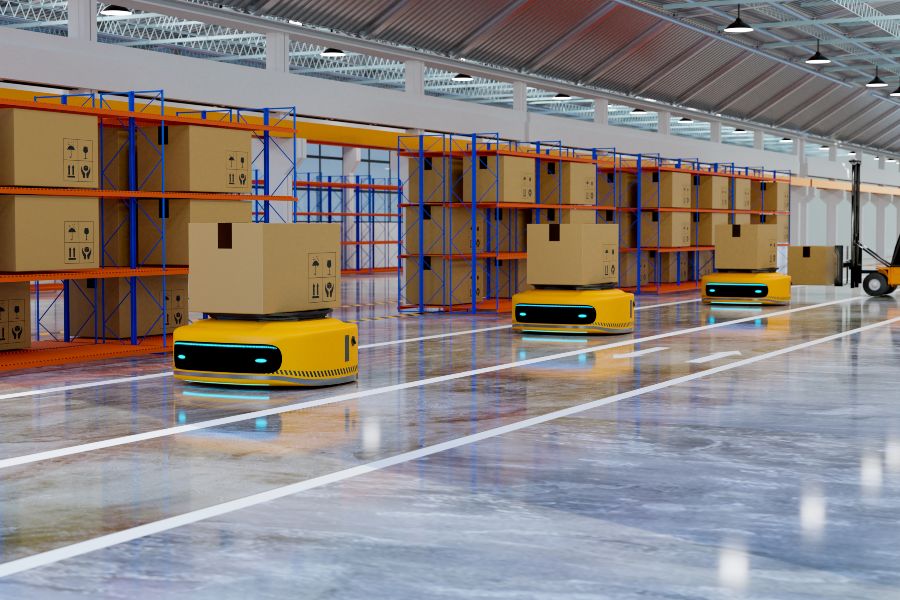
Today's warehouse robotics solutions go far beyond simple conveyor belts and barcode scanners. Modern robotic warehousing systems combine advanced vision systems, AI-driven decision-making, and warehouse robotics solutions that integrate seamlessly with existing warehouse management platforms to streamline operations end-to-end.
At the core of any robotic warehouse is the ability to maximise storage space, a challenge that vertical lift modules (VLMs) address particularly well. Modula vertical lift modules are enclosed vertical tray systems that use an internal lift and extractor mechanism to deliver stored items directly to an operator access point - warehouse operators never need to leave their workstation to retrieve goods. According to Modula, this approach can recover up to 90% of floor space compared with traditional storage methods, while also improving pick speed and accuracy.
Warehouse operators interact with these systems through intuitive dashboards that provide real-time inventory visibility, automated replenishment triggers, and performance analytics. The result is a robotic warehousing environment where humans focus on exception handling, quality control, and customer experience, while sophisticated robots handle the repetitive, high-volume work.
Types of Warehouse Robots and Robotic Warehousing Systems
From AGVs to Collaborative Robots
The warehousing industry has witnessed an explosion in the variety of robotic systems available, each designed to tackle specific operational challenges. Understanding the different types of robots is crucial for businesses considering warehouse automation investments.
- Automated Guided Vehicles (AGVs) - These robust machines replace traditional forklifts and pick carts, generally following predefined routes using embedded markers, magnetic tape, or wire guidance. AGVs excel at transporting heavy loads along consistent, predictable paths and are ideally suited for high-volume, repetitive material handling tasks. Navigation technology such as LiDAR is not exclusive to AGVs and does not define the category - the key distinction is that AGVs follow fixed paths, whereas AMRs make onboard routing decisions.
- Autonomous Mobile Robots (AMRs) - AMRs use onboard maps, sensors and onboard decision-making to calculate and recalculate their own routes dynamically, adapting to obstacles, changing warehouse layouts, and other traffic in real time. Unlike AGVs that follow fixed paths, AMRs can reroute without infrastructure changes.
- Automated Storage and Retrieval Systems (AS/RS) - AS/RS is a broad category that includes mini-load cranes, shuttle systems, and grid-based robots such as AutoStore. What they share is automated storage and retrieval of inventory in high-density configurations without human access inside the storage area. A grid-based AS/RS like AutoStore can also function as a goods-to-person system, demonstrating that these categories are not mutually exclusive.
- Vertical Lift Modules (VLMs) - Modula vertical lift modules and similar systems store goods vertically in automated columns, delivering items directly to warehouse operators at ergonomic workstations. VLMs dramatically reduce pick travel time whilst maximising available storage space.
- Collaborative robots (cobots) - "Cobot" describes a robot designed or configured for collaborative operation alongside human workers, not a specific navigation style. Cobots may be stationary robotic arms working at packing stations, or mobile systems assisting with picking. What defines them is the safety design and operating mode - typically reduced speed, force-limiting, or physical safeguarding - that allows them to share a workspace with people. Advanced sensors and safety systems are required to manage collision risk in shared environments.
- Robotic arms - Serving as precision instruments, these articulated systems can pick items with remarkable accuracy, pack products into containers, assemble components, or construct pallets with optimal weight distribution. Many are mounted on mobile bases for warehouse-wide versatility.
- Automated labelling robots - Automated labelling robots apply barcodes, compliance labels, and shipping labels at high speed with pinpoint accuracy, eliminating manual labelling errors and enabling warehouse operators to streamline operations across despatch workflows.
- Aerial drones and unmanned aerial vehicles - These agile machines rapidly scan inventory in areas human workers cannot reach, making them ideal for inventory scanning, stock level monitoring, and automatically updating inventory management systems in real-time.
- Goods-to-Person systems - Goods-to-person is a workflow, not a robot type. It describes any system - AS/RS, AMR, VLM, or other - that brings inventory to a stationary operator rather than sending the operator into the warehouse to pick. Eliminating pick walks dramatically reduces physical strain and can significantly improve picking speed and accuracy.
- Sorting robots - Leveraging computer vision and machine learning to identify and categorise items based on size, destination, or product type, these systems achieve remarkably high-speed and accurate sorting for e-commerce operations and distribution centres.
Key Applications and Use Cases
Where Robots Excel in Modern Warehouses
Warehouse robots perform an impressive array of tasks that address the core challenges facing modern warehouse logistics operations. Their applications span every aspect of warehouse operations, from receiving and storage to picking and shipping.
Material Handling
Mobile robots and automated guided vehicles transport pallets, bins, and individual items throughout warehouse space with efficiency that human workers cannot match. These systems significantly reduce labour costs whilst improving operational efficiency by ensuring materials reach their destinations faster and more reliably. When businesses deploy their own robots for transporting goods, they see immediate improvements in warehouse productivity.
Order Fulfilment to Improve Efficiency
Robotic order fulfilment systems revolutionise picking by selecting items from shelves, sorting them according to specific orders, and preparing them for packing orders at dedicated packing stations. Advanced warehouse robots use computer vision and barcode scanners to identify items accurately, whilst robotic arms can handle products ranging from delicate electronics to heavy industrial components. This automation helps achieve improved customer satisfaction through faster, more accurate order processing.
Inventory Management
Autonomous robots continuously monitor stock levels, automatically trigger replenishment orders, and maintain real-time accuracy in warehouse management systems. Aerial drones can perform comprehensive inventory scans in minutes rather than hours, flying to storage locations and updating inventory records automatically. These systems perform tasks that would require significant human labour whilst improving efficiency across large warehouses.
Automated Sorting
Advanced sorting systems process thousands of items per hour, using sophisticated algorithms and conveyor belts to route products to appropriate destinations. These systems are particularly valuable in e-commerce fulfilment centres and distribution centres where orders contain multiple items that must be consolidated efficiently. Other robots work alongside sorting systems to improve efficiency throughout the packing process.
Palletising and Depalletising
Modern robotic arms showcase precision capabilities by building pallets for maximum stability and protection, automatically calculating optimal weight distribution and product placement. This capability is crucial for reducing shipping damage and maximising transport efficiency. These systems perform different tasks related to the packing process whilst maintaining consistent quality standards that improve customer satisfaction.
The automotive industry, which was among the first to embrace warehouse automation, now uses robots throughout its supply chains for parts handling and assembly line feeding. Food and beverage companies rely on robotic systems to handle perishable items quickly and maintain cold chain integrity. Pharmaceutical companies leverage the extreme precision of robotic systems to track every product through their supply chain, meeting stringent regulatory requirements whilst reducing costs.
Turn Picking Chaos into Precision Perfection
Our Pick and Pack Solutions, enhanced by the robotic automation covered above, can dramatically improve your order accuracy and processing speed. tbh Skincare used this exact system to ship over 1M units with a 20x increase in daily orders. Get in touch with us today - (02) 9090 4747
Benefits Driving Widespread Adoption
Why Australian Businesses Are Investing in Warehouse Robotics
The business case for warehouse automation has become increasingly compelling as operational pressures intensify and technology costs decrease. Australian businesses are discovering that robotic systems deliver measurable returns across multiple operational dimensions.
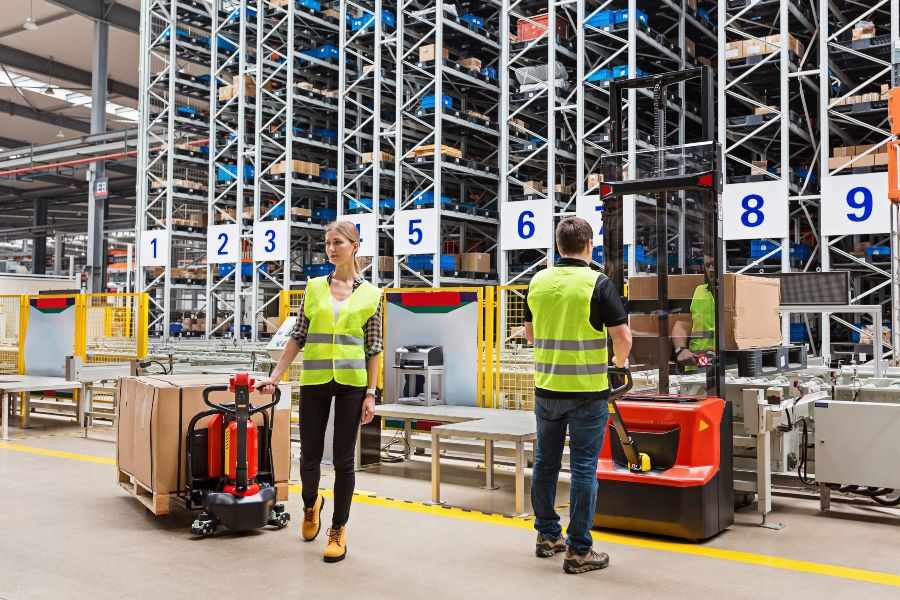
- Improved worker safety - Warehouse work involves significant physical strain through lifting, stretching, bending, and walking whilst carrying heavy objects over eight-hour shifts. Robotic systems eliminate these hazards by handling the most physically demanding tasks, allowing human workers to focus on activities that require judgment and problem-solving skills.
- Increased productivity - Warehouse robots work continuously without breaks, never experience fatigue, and maintain consistent performance levels 24/7. When robots handle repetitive tasks like transportation and basic picking, human workers can concentrate on higher-value activities that drive greater warehouse productivity.
- Optimised storage utilisation - Automated storage and retrieval systems can operate in areas too confined or dangerous for human access, enabling warehouses to pack inventory more densely. Some robotic systems can physically reconfigure warehouse layouts, moving entire shelving units to create more efficient storage patterns based on current demand.
- Enhanced operational efficiency - The seamless integration of robotic systems with warehouse management systems enables automatic adjustments when order patterns change or inventory levels fluctuate, without manual intervention. This responsiveness allows businesses to handle growing demand and high-volume periods without proportional increases in labour costs.
- Competitive advantage in recruitment - Warehouse automation makes facilities more attractive workplaces as modern workers increasingly prefer environments where technology augments their capabilities rather than subjecting them to purely physical labour. Companies implementing robotic systems often find it easier to attract and retain quality staff.
- Cost reduction across multiple areas - Whilst the upfront investment in robotic systems requires careful planning, businesses typically see rapid returns through reduced labour costs, lower injury-related expenses, decreased inventory shrinkage, and improved order accuracy that reduces returns and customer service costs.
Implementation Considerations and Future Trends
Planning Your Robotic Transformation
- Investment considerations - The investment landscape for robotic systems has become more accessible, with entry-level mobile robots starting in the tens of thousands of dollars (AUD) for the robot unit alone, while fully integrated AMR solutions, including software, infrastructure, and support, typically range from around $70,000 to over $300,000 AUD per unit, depending on payload, navigation sophistication, and safety requirements. Careful cost-benefit analysis ensures optimal return on the upfront investment.
- Integration with existing systems - Modern robotic systems must communicate seamlessly with current inventory management platforms, order processing systems, and supply chain management tools. Successful implementations leverage this integration to create unified operations where human operators, robots, and software systems work in perfect coordination.
- Scalability planning - The most effective robotic solutions can expand incrementally, starting with a few autonomous robots handling specific tasks and gradually adding capabilities as operational demands increase. This approach allows businesses to validate their automation strategy whilst managing investment requirements.
- Staff training and change management - Rather than viewing robots as replacements, successful companies frame automation as augmentation technology that eliminates physically demanding work while creating opportunities for workers to develop new skills in robot supervision and maintenance.
- AI-powered predictive analytics - Emerging trends include robotic systems that anticipate inventory needs and optimise workflows proactively, using machine learning algorithms to improve operational efficiency continuously.
- Multipurpose robots - Advanced systems that can handle various tasks are reducing the need for multiple specialised machines, offering greater flexibility and better return on investment for diverse warehouse operations.
- Computer vision and machine learning advances - Modern systems can identify items with remarkable accuracy, handle products of varying shapes and sizes, and adapt to new products without extensive reprogramming, making automation practical for businesses with diverse product ranges.
- Supply chain integration - The next frontier involves warehouse robots becoming part of broader automated networks connecting suppliers, manufacturers, and distribution centres, creating supply chains that respond to demand changes in real-time whilst maintaining optimal efficiency.
Ready To Implement Warehouse Robotics Across Your Operations?
As a premier third-party logistics provider 3PL services in Sydney and Melbourne, we combine advanced robotic systems with deep operational expertise to deliver measurable results - including Babyboo's 77% order growth while holding a 99.9% same-day dispatch rate. Call us today - (02) 9090 4747
Case Study: SKUTOPIA’s Robotic Fulfilment in Action
Turning Manual Bottlenecks into Scalable Growth
A fast-growing Australian beauty and wellness brand had hit the ceiling with its manual warehouse: promotion spikes created picking backlogs, accuracy issues, and rising labour costs. Partnering with SKUTOPIA’s robotics-led 3PL centres in Sydney and Melbourne, the brand plugged into a fulfilment network processing 20,000+ orders daily with 99.96% accuracy, without building its own automated warehouse.
The Solution: Robotic Storage, Smart Movement, Human Oversight
Stock is now stored in SKUTOPIA’s AutoStore robotic grid, with high-density bins enabling instant retrieval while protecting inventory.
Autonomous systems move goods between storage and packing stations, orchestrated by SKUTOPIA’s warehouse management platform, which syncs in real time with channels like Shopify, Amazon and WooCommerce.
Human specialists focus on quality control, custom packaging and brand presentation, while robots handle the heavy, repetitive work.
Key Results
- Speed & reliability – 99% of orders are dispatched the same day and delivered in under two days on average.
- Accuracy & customer experience – 99.96% order accuracy significantly reduced complaints, reships and support load.
- Cost & scalability – AI-driven carrier optimisation helps cut shipping costs by up to 55% while scaling from dozens to tens of thousands of orders.
- Sustainability & brand alignment – Cut-to-fit automated packaging reduces waste by up to 40% per order, lowering carton and freight costs while supporting sustainability goals.
By tapping into SKUTOPIA’s robotics-powered 3PL model, fulfilment shifted from a constraint to a growth engine, freeing the brand’s internal team to focus on product, marketing and expansion.
Embracing the Automated Advantage in Australian Warehousing
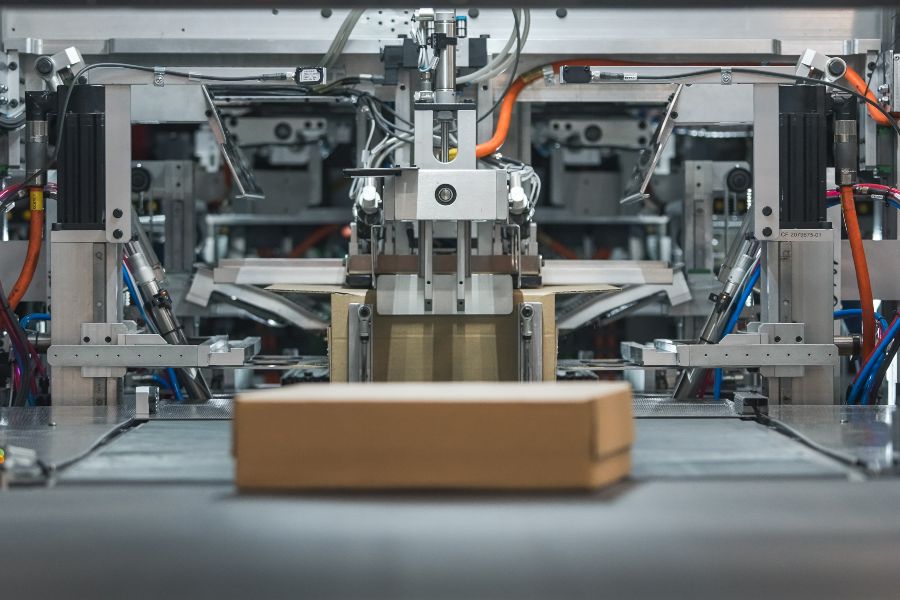
The transformation of Australian warehousing through robotic automation represents a fundamental shift toward operations that prioritise both human potential and technological capability. Warehouse robotics creates environments where technology handles physically demanding and repetitive tasks whilst human workers focus on activities requiring creativity and problem-solving.
As growing demand pressures traditional warehouse operations and labour costs rise, businesses embracing warehouse automation position themselves for sustainable competitive advantage. From Amazon's more than 1 million warehouse robots to Walmart's autonomous electric forklifts, industry leaders demonstrate that warehouse robotics delivers measurable improvements in efficiency, safety, and cost management.
For business leaders evaluating current operations, the question isn't whether automation will transform their industry; it's whether they'll lead or follow this transformation. The time for incremental improvements has passed. Warehouse automation represents the foundation for thriving in an increasingly demanding marketplace where customer expectations and operational complexities continue to intensify.

Fariha Shuvakhana
Fariha Shuvakhana is the Chief Growth Officer at SKUTOPIA, a 3PL fulfilment and shipping platform for fast‑growing eCommerce businesses. Fariha focuses on sustainable, customer‑first growth - aligning go‑to‑market strategy with operational efficiency and partner‑led expansion.