Two Technologies, One Critical Decision - Here's How to Get It Right
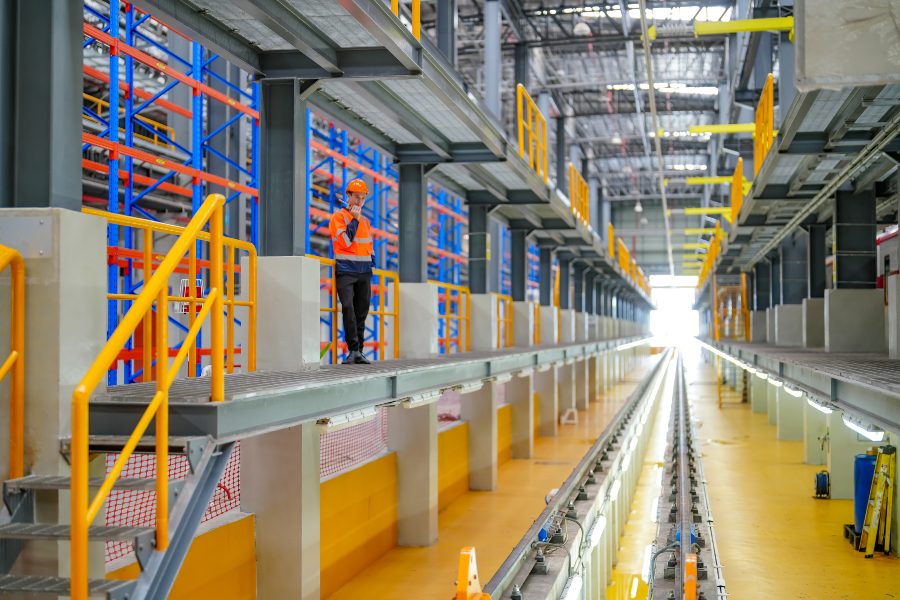
Alt text: Engineer inspecting high-density racking system relevant to AutoStore vs AMR warehouse comparison
Choosing between AutoStore and AMRs (autonomous mobile robots) is one of the most consequential decisions in warehouse automation planning. The system you invest in shapes your storage capacity, throughput ceiling, cost per order, and how effectively you can scale - which is why it pays to understand what each technology actually does before committing to either.
Two systems dominate the conversation:
- AutoStore, the cube-based automated storage and retrieval system that has become the gold standard in high-density goods-to-person fulfilment
- Autonomous mobile robots (AMRs), the flexible, floor-navigating robots that have rapidly colonised modern warehouses across retail, healthcare facilities, and distribution centres.
They serve different operational needs, and the wrong choice for your volume, SKU profile, and layout creates friction that compounds as you grow.
At SKUTOPIA, we don't just consult on warehouse automation. We operate AutoStore in live fulfilment environments every day, processing real orders for real eCommerce brands at scale. What follows is a genuine head-to-head breakdown across six operational categories. We'll present both technologies fairly, including where AMR robots have a clear and legitimate edge. The goal is to give you what most comparisons don't: an honest framework for making the right call for your specific operation.
If you want to see what robotic order fulfilment looks like in practice before diving into the numbers, explore SKUTOPIA's robotic order fulfilment solutions here.
AutoStore and Autonomous Mobile Robots: What Are We Actually Comparing?
A Quick Primer on These Two Automated Storage and Retrieval Systems
Before the comparison table, it's worth establishing what these two robotic systems actually are - because they're often conflated in ways that muddy the decision.
AutoStore is an ASRS system - a dense cube of aluminium grid in which robots travel along the top layer, retrieving bins from below and delivering them to human operators at fixed workstations. There are no aisles, no pick walks, and no human access inside the storage area. The inventory comes to the person. With more than 1,950 systems deployed globally, it is the world's most widely adopted cube storage system.
Autonomous mobile robots (AMRs) are a distinct category of mobile robots and are not inherently AS/RS systems. Unlike older automated guided vehicles that follow fixed paths using magnetic strips or floor markers, AMRs use sensors, cameras, and onboard navigation software to move dynamically around obstacles and alongside human workers. Implementations vary widely: AMRs can move mobile shelving racks or totes to packing stations, perform collaborative picking alongside human pickers, handle point-to-point goods transport, or operate in shelf-to-person configurations. Treating rack-moving AMRs as representative of the entire category understates the technology's range.
Both are legitimate automated warehouse robots that are transforming industries - but the operational profile of each is quite different.
Your Fulfilment Should Be Fuelling Growth, Not Fighting It
Boost Lab achieved 8x revenue growth and a 50% reduction in fulfilment costs after partnering with SKUTOPIA - proof that the right robotic fulfilment infrastructure directly unlocks growth. Explore SKUTOPIA's pick and pack solutions - engineered for speed and accuracy at scale - and same-day delivery services to turn fast fulfilment into a genuine competitive edge. Contact us today - (02) 9090 4747
The 6-Category Comparison: AutoStore vs AMR Robots Head to Head
Space Efficiency, Throughput, Reliability, Scalability, Pick Accuracy, and Cost per Order
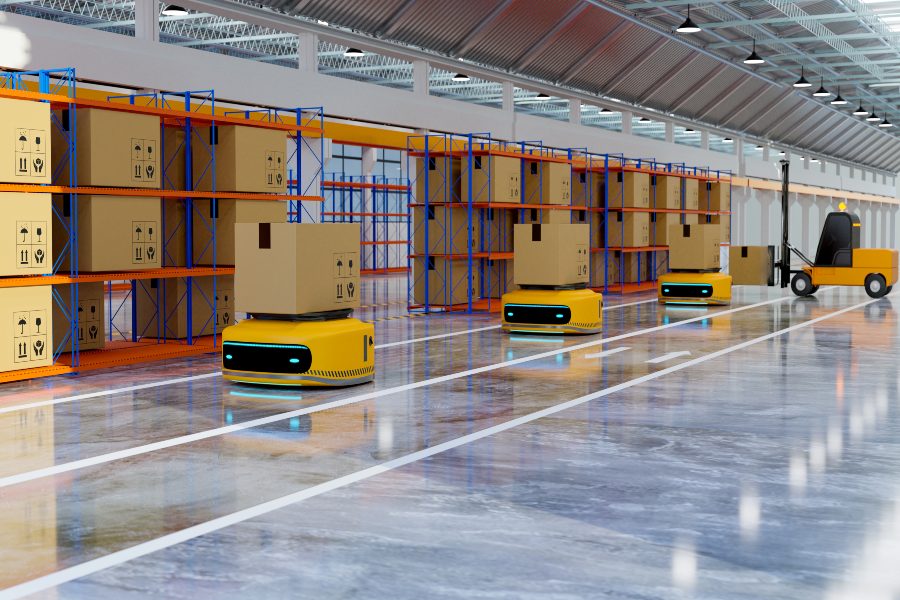
These six categories are the operational levers that determine ROI in any warehouse automation investment. Getting them right is the difference between a system that pays for itself and one that becomes a liability at volume.
All SKUTOPIA figures are based on SKUTOPIA's own AutoStore operation and should not be read as universal AutoStore vendor claims.
The comparison is nuanced. Based on SKUTOPIA's own operational data, AutoStore performs strongly on space utilisation, throughput, accuracy, and long-run cost efficiency at volume. AMR systems lead on deployment speed, layout flexibility, and SKU range. Neither technology is universally superior - the right answer depends on your specific volume, SKU profile, layout, and growth trajectory.
Software integration: a factor that determines whether the hardware performs
WMS, WCS/WES and fleet management are not optional
Physical capacity does not guarantee realised throughput. Both AutoStore and AMR deployments depend on software integration to perform.
AutoStore requires integration with a Warehouse Management System (WMS) and typically a Warehouse Execution System (WES) to manage Port balancing, task prioritisation, robot scheduling, and coordination with upstream and downstream packing and sortation systems. AutoStore's own documentation describes WMS/WES integration and end-to-end orchestration as performance dependencies, not optional add-ons.
AMR fleets require fleet management software that handles traffic management, task allocation, and coordination with picking and packing workstations. Integration with the broader WMS/WCS stack is equally critical for AMRs - congestion, poor task sequencing and workstation bottlenecks can eliminate the throughput gains the robots provide.
When evaluating either system, assess the software stack and integration complexity alongside the hardware.
Where the AutoStore System Has the Clear Edge
Why High-Volume Warehouse Operations Choose High Density Storage
Space Efficiency and Storage Density at Scale
AutoStore uses up to 75% less floor space than traditional shelving - and based on SKUTOPIA's own operational data, requires 4x less floor space than an equivalent AMR footprint. The difference comes down to physics. AutoStore stacks bins vertically within a dense cube, exploiting vertical space that floor-level systems simply cannot reach. AMR robots, by contrast, operate at floor level and require clear aisle space to navigate. In a constrained warehouse layout, this limits how much storage capacity can be achieved per square metre.
One flooring consideration worth noting: AutoStore robots do not traffic the warehouse slab, which reduces ongoing operational wear compared to AMR floor traffic. However, AutoStore installations do have floor requirements - surface regularity tolerances can be stricter than those for typical AMR deployments - so floor assessment is a necessary step in any AutoStore feasibility study.
For eCommerce brands and 3PL operators managing large SKU libraries in space-constrained fulfilment centres, the high-density storage of AutoStore is operationally transformative.
High Throughput and High Speed Pick Performance
SKUTOPIA's AutoStore operation delivers 2x order throughput and 4x faster picking compared to AMR-based equivalents. The goods-to-person design eliminates pick walks entirely - operators remain at fixed workstations while the system delivers bins to them continuously.AutoStore's RelayPort can achieve up to 650 bin presentations per hour; enterprise-scale systems support very large bin counts and high daily volumes, though specific throughput figures depend on system configuration, Port count, robot fleet size and software orchestration.
For peak trading periods - Black Friday, major product launches, viral demand spikes - this throughput ceiling matters enormously. AMR throughput is configuration- and workflow-dependent. High-volume AMR deployments exist; performance constraints typically relate to congestion, workstation capacity, travel distances and fleet orchestration rather than being an inherent ceiling of the technology.
Pick Accuracy and Product Integrity
SKUTOPIA's AutoStore operation achieves approximately 100% pick accuracy. Every inventory movement is fully scanned, and the enclosed bin-based storage area means inventory is protected from floor-level traffic, environmental exposure, and handling damage throughout the entire storage and retrieval process.
Product protection and regulatory suitability depend on AMR type, packaging, scanning protocols, handling design, and operating controls - not on the automation technology category alone. The enclosed bin environment is one design factor that can reduce certain handling exposures; it does not by itself establish regulatory suitability or guarantee protection from every environmental variable.
What Does 80% Faster Fulfilment Actually Look Like?
Babyboo improved orders fulfilled within 24 hours by 80% and stock transfers within two business days by ~270% after partnering with SKUTOPIA - results driven by smarter inventory positioning and predictive fulfilment. Our inventory forecasting keeps stock precisely where it needs to be before demand hits, while order orchestration ensures every order moves through the system without delay or manual intervention. Contact us today - (02) 9090 4747
Where AMR Robots Have the Real Advantage
Don't Overlook These Scenarios Where Autonomous Mobile Robots Win
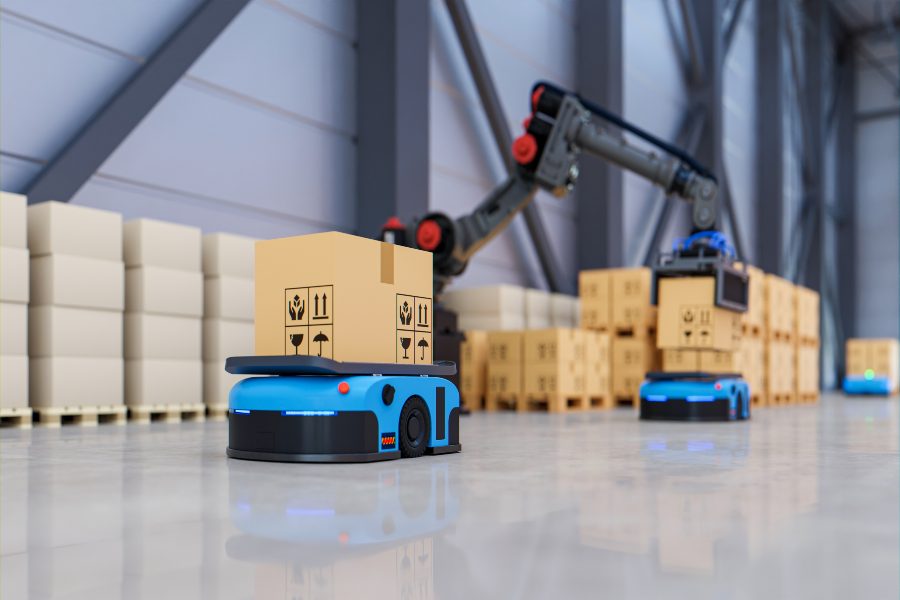
AMRs operate with genuine advantages in specific operational contexts, and any honest automation strategy has to account for them.
High-Speed Deployment with Minimal Infrastructure
One of the most compelling features of AMR systems is deployment speed. Because AMRs navigate dynamically using sensor data and onboard mapping rather than fixed paths or structural grid installations, they require minimal infrastructure changes to get operational. Some AMR solutions can be deployed in a matter of weeks. For businesses in early automation stages, or those needing to move quickly without a major CapEx commitment, this is a real, meaningful advantage.
Broader SKU and product range
AMRs handle a broader range of item sizes and weights, including larger, bulkier, or irregularly shaped products that don't fit neatly within AutoStore bin dimensions. For operations where SKU profiles are diverse, frequently changing, or include items that exceed bin specifications, AMR systems are structurally better suited. AMRs adapt more readily to changing warehouse layouts and can operate alongside human workers and pickers in dynamic environments - a flexibility that makes them well-suited to warehouse operations where the product mix evolves regularly.
It's also worth noting that AutoStore requires a decanting step on inbound goods - products must be sorted into bins before entering the grid. For high-inbound-volume operations, this additional processing stage needs to be resourced and planned for. AMRs can often handle inbound goods more directly, which is a meaningful operational advantage in certain fulfilment models.
Economics at earlier-stage volumes
AutoStore carries a higher upfront infrastructure cost than most AMR deployments. For operations not yet at the volume where AutoStore's long-run OpEx advantages fully materialise, AMR-based systems can offer a more accessible starting point. RaaS (Robotics-as-a-Service) models exist for both technologies, though availability depends on the specific provider and commercial arrangement. A meaningful economic comparison requires evaluating total system cost - infrastructure, labour, building costs, throughput, utilisation, maintenance and software - not per-robot unit price alone.
The Verdict: Which Automation Strategy Should You Actually Choose in 2026?
It Comes Down to Volume, SKU Profile, and Where You're Headed
Choose AutoStore if:
- You're running or scaling towards high-volume DTC or B2B eCommerce operations
- Space is constrained, and SKU count is high (small-to-medium items that fit in bins)
- Peak reliability and near-100% accuracy are non-negotiable
- You're planning for long-term OpEx efficiency and the upfront CapEx is viable
- Product fragility or value makes an enclosed, scanned storage area preferable
Consider AMRs if:
- You need to automate quickly with minimal infrastructure disruption
- Your SKU profile is broad, irregular, or frequently changing
- You're earlier-stage and not yet at the volume threshold to justify AutoStore CapEx
- Your warehouse layout needs to remain flexible or is subject to frequent change
The case for both: Many high-performing fulfilment operations don't choose one at the expense of the other. AutoStore handles the dense, high-velocity storage and retrieval at the core of the operation. AMR robots manage peripheral tasks - transporting consolidated orders to packing stations, handling inbound goods, managing outbound staging - where their flexibility and lower infrastructure requirements are an advantage. These robotic solutions are designed to complement, not compete.
A 2022 Deloitte report on supply chain automation found that hybrid automation models - combining fixed ASRS systems with flexible mobile robots - consistently outperformed single-technology deployments on throughput, accuracy, and cost per order across distribution centres of all sizes. Integrating AMRs alongside AutoStore is increasingly the architecture of choice for serious warehouse operations.
1 Million Units. 20x Daily Orders. Zero Visibility Lost.
tbh Skincare shipped over 1 million units and scaled daily orders 20x with SKUTOPIA - without losing a single thread of operational visibility. Whether you're a fast-growing DTC brand or expanding into retail, SKUTOPIA's 3PL services across Sydney and Melbourne provide robotic infrastructure to scale without friction, along with retail fulfilment capabilities built to handle the complexity of multi-channel distribution. Contact us today - (02) 9090 4747
AutoStore or AMRs? The Answer Is Already in Your Data
The AutoStore vs AMRs decision becomes straightforward once you apply the right lens. Measure your operation across the six categories - space efficiency, throughput, reliability, scalability, pick accuracy, and cost per order - and the answer surfaces quickly.
Based on SKUTOPIA's own operational data, AutoStore delivers 4x space savings over an equivalent AMR footprint, 99.7% system uptime, 2x order throughput, 4x faster picking, approximately 100% pick accuracy, and 60% lower OpEx compared to AMR-based equivalents - against a specific baseline and measurement period that should be confirmed before publication. Those figures represent what happens when the right technology is matched to the right operation.
The right choice scales with your business rather than against it - and getting there starts with honest data about your current operation.

Fariha Shuvakhana
Fariha Shuvakhana is the Chief Growth Officer at SKUTOPIA, a 3PL fulfilment and shipping platform for fast‑growing eCommerce businesses. Fariha focuses on sustainable, customer‑first growth - aligning go‑to‑market strategy with operational efficiency and partner‑led expansion.